In short: Discover the impact of workplace fatigue on productivity and costs. Learn how to address this hidden challenge in your organization.
Free self-check: the governance self-audit gives a quick check of governance, controls and accountability, in about 10 minutes.
The Hidden Cost of Workplace Fatigue: What Your Budget Isn’t Telling You
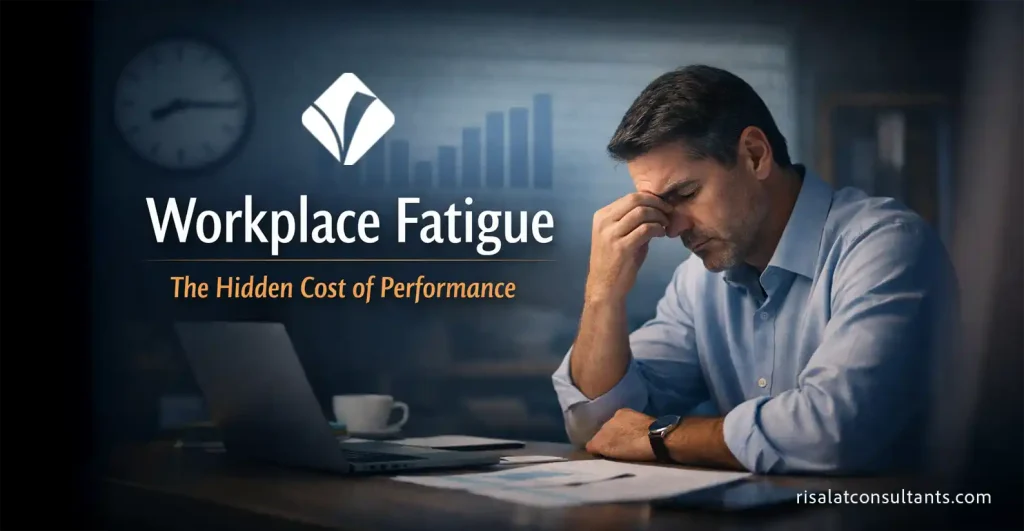
Workplace fatigue quietly erodes an organization’s performance. Studies show that 76% of employees feel fatigued during work hours, which reduces productivity by 20%. Each tired employee costs their employer around $2,000 yearly in lost productivity. Most companies don’t factor fatigue into their budget forecasts and operational plans.
Workplace fatigue extends far beyond simple tiredness. Workers struggle when they face long hours, uneven workload distribution, and insufficient recovery time. Research shows that 7 out of 10 employees are either struggling or suffering, leading to presenteeism, disengagement, and rising health costs. Employees who sleep less than six hours per night face a 2.9 times higher risk of workplace injury. With only 35% of the workforce driving the majority of performance outcomes, fatigue becomes a structural business risk. Managing human energy is therefore not optional, it is a strategic necessity.
工作场所疲劳的真实成本
“The calculator demonstrates that doing nothing to address fatigue costs employers a lot more than they think.” – Deborah A.P. Hersman, President and CEO of the National Safety Council, leader in workplace safety and health initiatives
Most organizations underestimate the true financial impact of workplace fatigue. More than one-third of Americans sleep less than seven hours each night, and over 10% sleep fewer than six hours. This chronic sleep deficit creates a hidden performance crisis that directly affects workplace productivity, safety, and decision-making quality.
The loss in productivity from fatigue shows up in ways that companies rarely track. Employees who sleep fewer than six hours per night cost employers approximately six workdays annually in lost productivity. Those who sleep six to seven hours still cost 3.7 workdays yearly. This drain happens through poor concentration, slower reactions, and reduced brain function.
《职业与环境医学杂志》发表的研究表明,疲劳可使生产力降低20%。睡眠不足会改变大脑控制思维的区域。这对决策制定、保持注意力和集中精神有着巨大的影响。
Night and rotating shift workers miss work twice as often as day shift workers. The problem gets worse with physical and mental exhaustion building up over time. Workers on shifts lasting 10 hours or longer face higher injury risks. Their performance keeps getting worse throughout these long shifts.
病假之外的财务影响
工作场所疲劳造成的资金损失达到了惊人的数字。一个拥有1,000名员工的公司每年通常因疲劳相关的费用损失约250万美元。这包括来自缺勤员工的671,000美元以及来自在岗但表现不佳的员工的190万美元。
Healthcare costs add another big expense to fatigue-related problems. Companies could save an extra $1.3 million in healthcare spending by helping employees sleep better. Some specific health issues cost even more – one employee with untreated sleep apnea can cost their employer over $7,400 extra in healthcare every year.
The financial impact scales dramatically with organizational size. Research shows that an average Fortune 500 company with approximately 52,000 employees loses nearly $198 million annually due to fatigue-related productivity loss and safety risks. In high-risk sectors such as transportation, a 1,000-employee operation can lose over $1.5 million per year due to fatigue-driven inefficiencies.
Why traditional budgets miss the fatigue factor
Regular budgeting methods can’t catch fatigue-related costs for several reasons. The usual approach takes last year’s numbers as a starting point. It then makes standard changes based on company goals and economic factors like inflation. This creates a fixed picture that doesn’t match the changing nature of human performance.
Rigid budgets cause another big problem. Making these budgets takes three to four months and uses up 20-30% of senior executives’ and financial managers’ time. Once set, these budgets become fixed reference points instead of flexible tools.
Real-world results highlight this disconnect. A study of planning and forecasting found that 55% of people thought their budget assumptions became useless within six months. This happens because standard budgeting systems can’t account for human factors like fatigue that change throughout the year.
What Causes Workplace Fatigue?
Root causes of workplace fatigue stem from organizational structures and personal factors that lead to worker exhaustion. Workplace fatigue happens due to long working hours, poor shift designs, or when workers can’t recover between work periods. This complex issue affects about 20% of US workers who work shifts or alternate their schedules to keep up with our 24-hour society.
Long hours and poor workload design
Long working hours are major contributors to workplace fatigue. Almost a quarter of American workers put in more than 40 hours each week. Both very high and low workload levels can cause fatigue. High-pressure situations force people to concentrate intensely for too long, while boring, repetitive tasks make workers lose focus and become less alert. Work schedules with long shifts, night work, and little recovery time make fatigue worse. Jobs with rotating shifts often give workers little control but high pressure, which creates an exhausting environment.
Lack of recovery time and rest culture
Workers need proper recovery time to avoid fatigue. Irregular shift patterns, especially night work, disrupt the body’s natural sleep cycle and lead to poor sleep quality with frequent interruptions. Shift workers usually get lighter, shorter sleep during the day, and noise often wakes them up. Sleep debt builds up over several workdays when there isn’t enough time between shifts. Short breaks with relaxation activities help reduce job stress and fatigue. However, many organizational cultures implicitly discourage proper recovery periods, as shown by expectations to stay connected outside work hours.
This pattern reflects broader structural shifts in how work is organized and digitized, a transformation examined in our work on Digital Workplace Evolution, where modern workplace design and constant connectivity reshape human performance and energy dynamics.
Emotional exhaustion and mental overload
心理因素在多方面对工作疲劳起着重要作用。当人们无法有效处理信息和做出决策时,就会经历认知过载。世界卫生组织表示,职业倦怠源于长期的职场压力,具有三个主要特征:精力耗尽、对工作产生疏离感以及工作表现下降。需要进行情感劳动的工作(即人们在与他人工作时必须控制自己情绪的工作)会使员工特别容易感到疲劳。某些行业的情况比其他行业更严重。例如,一项研究发现,71.2%的医护人员面临与工作相关的疲劳。
Systemic stressors beyond the workplace
Outside factors make workplace fatigue worse in ways that traditional management often misses. Personal life issues like childcare, working multiple jobs, and home situations affect how tired workers become. Sleep problems from health conditions, medicines, and lifestyle choices add to workplace fatigue. Things like nicotine, caffeine, and alcohol affect sleep quality. The spillover-crossover model shows how work experiences affect home life and family members. This creates a cycle where family responsibilities prevent proper rest and increase workplace fatigue. Temp workers face unique challenges and report more fatigue along with longer, irregular, and unpredictable hours compared to permanent staff.
How Workplace Fatigue Undermines Organizational Capacity
“Many of us have been conditioned to just power through our fatigue, but worker health and safety on the job are compromised when we don’t get the sleep we need.” – Deborah A.P. Hersman, President and CEO of the National Safety Council, leader in workplace safety and health initiatives
Fatigue reduces an organization’s ability to operate well and creates ripple effects across systems. Research shows that fatigue works like alcohol in our bodies – being awake for 17 hours equals a blood alcohol content of 0.05. After 21 hours without sleep, it matches the legal limit of 0.08.
决策与创新减少
疲劳会损害我们思考和规划复杂任务的能力。工人在疲劳时会做出更糟糕的选择,这会导致糟糕的工作绩效。最初的迹象表现为推迟决策和延误。如果任其发展,人们将变得不愿承担明智的风险,并停止提出新想法。受变革疲劳打击最严重的科技公司的营业利润率下降了 7.2 个百分点。与处理得更好的公司相比,其三年内的总股东回报率下降了 12.4 个百分点。
Increased errors and safety risks
Safety problems from workplace fatigue are serious. Tired workers react slower, process information poorly, forget things, and stay less alert. In fact, fatigue played a role in major disasters like the Chernobyl nuclear accident, Texas City incident, and Exxon Valdez oil spill. Night shift workers face 30% more workplace accidents than morning shift workers. Fatigue causes 20% of major road accidents, which costs between £115-£240 million yearly in work accidents.
Impact on project delivery and timelines
项目管理 takes a big hit from fatigue. Teams dealing with ongoing change fatigue see 45% fewer suggestions from employees and 38% less experimental work. Project fatigue damages project management offices and their goals, especially when wrapping up projects. Teams lose most project managers during the execution phase, which creates uncertainty.
Presenteeism vs absenteeism: the hidden drain
Presenteeism (coming to work sick) hurts organizations more than absenteeism, though both damage workplace morale and productivity. Money lost from presenteeism can be 1.5 times more than losses from absenteeism. Studies confirm that presenteeism, not absenteeism, makes workers more likely to face moderate or severe exhaustion. Both issues hurt work performance, even when accounting for health status and other factors. This hidden problem leads to more mistakes, lower quality work, and reduces team productivity.
Managing Workplace Fatigue at the Organizational Level
Organizations must approach workplace fatigue as a systemic operational risk rather than an individual weakness. Sustainable performance requires redesigning work structures, leadership practices, and recovery systems. A structured fatigue management framework strengthens institutional resilience, reduces safety incidents, and protects long-term productivity.
Fatigue management is therefore not only a productivity concern but a safety imperative. This connection between worker energy, regulatory compliance, and operational risk was central to our work in the Occupational Safety & Health Administration – Amsterdam program, where structured safety governance frameworks were explored to mitigate fatigue-related risks.
Redesigning schedules and workload distribution
从白天到傍晚再到夜间的轮班安排比逆向轮班模式更好,因为它们符合我们的自然身体节律。将轮班时间保持在12小时以内有助于防止疲劳积聚。组织应设定明确的工作时间限制并规定休息时间:每2.5小时休息15分钟,满5小时休息30小时,满10小时再休息30小时。团队可以通过在成员之间分担任务来减少身心压力。
Embedding rest and recovery into operations
Recovery isn’t just nice to have – it’s a skill that needs planning and boundaries. Work design must include recovery through:
- Proper sleep facilities when needed
- Recovery areas with quiet zones and green spaces
- Regular no-meeting times in calendars
- Short breaks that boost thinking ability and energy
Studies show that good recovery leads to better sleep, stronger resilience, higher job satisfaction, and less emotional exhaustion.
Training managers to recognize and respond to fatigue
Supervisors play a crucial role in spotting employee fatigue. Manager training should show how energy affects problem-solving, listening, critical thinking, and patience, essential leadership skills. Low energy brings irritability, negativity, lack of interest, and poor focus. Training must cover early fatigue signs, company policies to handle issues, and regular reviews to keep improving.
Effective performance systems are a cornerstone of sustainable workforce energy and organizational success. Our Effective Performance Management Training in Goa helps leaders align performance expectations, coaching practices, and energy-aware evaluation approaches to reduce fatigue-related productivity loss and build resilient teams.
Creating feedback loops to monitor energy levels
良好的反馈系统有助于追踪整个组织的疲劳程度。能量审计有助于管理者发现自身的能量模式并在“高效状态”下工作。这有助于人们全天关注自己的精力,并在最清醒的时候安排艰巨的任务。诸如可穿戴设备、绩效软件和自我报告等工具可提供用于管理疲劳的有用信息。
战略监测与评估系统对于将数据转化为绩效提升至关重要。通过我们在西班牙的战略绩效监测与评估工作,各组织学习如何评估人类精力模式、将福祉指标纳入绩效仪表盘,并在员工系统中嵌入持续改进。
Building a Culture of Sustainable Energy to Reduce Workplace Fatigue
Organizations that prioritize sustainable human energy outperform those that rely on endurance and overextension. When employees perceive that wellbeing is genuinely valued, engagement, creativity, and retention improve significantly. Building an energy-aware culture shifts performance management from pressure-driven output to long-term productivity sustainability.
优先考虑福祉的领导实践
Leaders build the foundation for organizational energy sustainability through their daily actions. Leaders affect workplace mental health more than doctors or therapists, according to research. Good leaders show empathy, create psychological safety, and set an example for wellbeing behaviors. They take real breaks during vacations, set clear email boundaries, and hold walking meetings.
Shifting from grind culture to performance sustainability
The traditional grind culture celebrates constant hustle and long hours. This leads to burnout, poor work-life balance, and high turnover rates. Performance sustainability focuses on energy clarity rather than constant intensity. Leadership becomes about sustainability rather than endurance after age 40. Leaders who practice sustainability make better decisions under pressure and communicate better.
Institutionalizing energy management policies
Organizations need clear policies with principles and specific targets to manage energy effectively. These policies should offer flexibility, which helps boost employee participation, loyalty and retention. Companies should reward sustainable behaviors to show they value energy management. Your organization might need to rethink capacity building if it faces productivity loss, delivery delays, or staff burnout. Risalat’s global learning and development programs can strengthen organizational resilience, boost workforce performance, and embed green energy management into your governance and operations.
职场疲劳并非个人弱点,而是一种结构性治理风险。衡量、管理并围绕人类精力进行设计的机构,其表现始终优于忽视它的机构。如果您的组织正面临生产力下降、项目交付延迟或倦怠加剧的问题,解决方案不是加大压力,而是更明智的工作设计。
将这些原则嵌入劳动力系统需要结构化的战略。我们的可持续人力资源管理培训通过可持续的劳动力设计,支持组织将福祉、生产力和长期绩效结合起来。
使用技术来追踪和支持能量水平
Employees welcome on-the-job data collection to improve their performance and wellbeing – 90% support this approach. However, companies must avoid stealth monitoring as it hurts trust and morale. The right technology helps managers spot early signs of burnout and optimize workflows. This enables them to provide customized support.
Aligning human energy with strategic goals
Organizations achieve measurable strategic gains when human energy management aligns with corporate objectives. Companies in the top 20% for employee wellbeing outperform the S&P 500 by approximately 520 basis points in stock performance. The data is clear: investing in workforce energy is not a wellness initiative, it is a competitive advantage.
观看

Know people who should read this? Become an Ambassador or write with Risalat.
自2011年以来始终是项目成功的合作伙伴,为政府部委、公共机构和项目团队提供诊断评估、咨询支持与应用型学习。