Points clés
- Dates
- 1–5 févr. 2027 (5 jours)
- Lieu
- Klaus K Hotel, Helsinki, Finlande
- Frais par participant
- £4,750 (GBP)
- Paiement
- Sur facture et par virement bancaire
- Clôture des inscriptions
- 23 déc. 2026
- Certificat
- Certificat de participation
- Option intra
- Organisez-le pour votre équipe, à vos dates
Présentation du programme
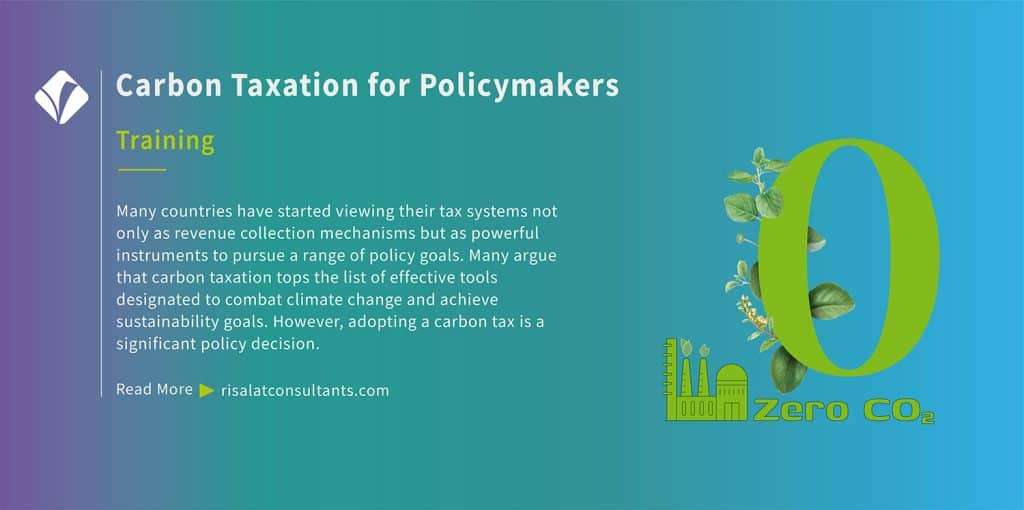
Following the Paris Climate Accords, the world has witnessed a resurgence in the interest of policy instruments that put a price on greenhouse gas emissions (GHG). Many countries have started viewing their tax systems not only as revenue collection mechanisms but as powerful instruments to pursue a range of policy goals. Many argue that carbon taxation tops the list of effective tools designated to combat climate change and achieve sustainability goals. However, adopting a carbon tax is a significant policy decision. It needs to be approached carefully to ensure it serves the right purpose and achieves the desired outcome.
Carbon tax normally forms part of a larger climate, energy, and fiscal policy mix. Determining whether the carbon tax is a suitable choice requires a detailed understanding of its work mechanism, comparative advantages against other policy tools, and how it matches with specific country objectives. Comprehending how different policy tools complement, overlap with, and counteract each other is what can drive policy design success.
This training programme has exclusively been developed by Risalat to help its delegates understand the peculiarities of carbon taxation and policymaking. Throughout the programme, you shall acquire vital knowledge and skills to promote the achievement of carbon neutrality.
- Intrants
- Activités
- Produits
- Effets
- Impact
Public cible
The programme is suitable for:
- Government officials and policymakers responsible for the design, implementation, and evaluation of carbon policies
- Business Managers and Executives that are affected by carbon taxation and GHG reduction policy
- Environmental and Sustainability Specialists
- Members of NGOs and CSOs advocating for climate change mitigation
Cochez ce que votre équipe doit être capable de faire.
Objectifs du programme
Upon the successful completion of this training course, its delegates shall be able to:
- Demonstrate a solid understanding of fundamental carbon pricing concepts
- Comprehend what role carbon pricing plays in the achievement of global climate change and carbon neutrality goals
- Understand carbon policy design options and analyze their advantages and disadvantages
- Assess the economic implications of carbon taxation
- Understand the environmental, social equity, and distributional impacts of carbon taxation
- Learn how to build carbon policy implementation and compliance capacity
- Promote collaboration and engagement during carbon policymaking for better design outcomes
Contenu du programme
- Understanding climate change
- The growing interest in carbon pricing
- Fundamental concepts relating to carbon pricing
- International climate agreements and commitments
- Carbon taxation policy rationale – When is it the right choice?
- Alignment with national climate goals and development objectives
- Setting the stage for tax design
- Determining policy objectives
- Framing the national context
- Principles of effective carbon tax design
- Carbon tax modeling
- Partial economic and technology models
- Systemic economic and technology models
- Choosing a suitable modeling approach
- Defining carbon tax base
- Determining tax rate
- Carbon tax coverage and exemptions
- Revenue allocation and use
- Economic Implications of a carbon tax and market behavior
- Environmental Impact and climate risk mitigation
- Interactions between a carbon tax and other policy instruments
- Equity Considerations in carbon tax policies
- Distributional impacts on different population groups
- Generating public acceptance of carbon taxes
- Policy implementation and compliance; Ensuring oversight
- Addressing unwanted outcomes
- Evaluating policy outcomes
- Adjusting tax programmes following the evaluation
- The last day of the programme will focus on the practical utilization of knowledge and skills acquired during the previous days.
- The first part of the session will serve as a skills application exercise focused on building a carbon tax model and drafting policy considerations.
- The second part of the day will center on the exposure visit to RCI partner institution engaged with carbon policy, taxation, and stakeholder communication.
Contenu détaillé jour par jour
Premier jour
- Understanding climate change
- The growing interest in carbon pricing
- Fundamental concepts relating to carbon pricing
- International climate agreements and commitments
- Carbon taxation policy rationale – When is it the right choice?
- Alignment with national climate goals and development objectives
- Setting the stage for tax design
Deuxième jour
- Determining policy objectives
- Framing the national context
- Principles of effective carbon tax design
- Carbon tax modeling
- Partial economic and technology models
- Systemic economic and technology models
- Choosing a suitable modeling approach
Troisième jour
- Defining carbon tax base
- Determining tax rate
- Carbon tax coverage and exemptions
- Revenue allocation and use
- Economic Implications of a carbon tax and market behavior
- Environmental Impact and climate risk mitigation
- Interactions between a carbon tax and other policy instruments
Quatrième jour
- Equity Considerations in carbon tax policies
- Distributional impacts on different population groups
- Generating public acceptance of carbon taxes
- Policy implementation and compliance; Ensuring oversight
- Addressing unwanted outcomes
- Evaluating policy outcomes
- Adjusting tax programmes following the evaluation
Fifth Day – Application Exercise and Exposure Visit
The last day of the programme will focus on the practical utilization of knowledge and skills acquired during the previous days. The first part of the session will serve as a skills application exercise focused on building a carbon tax model and drafting policy considerations.
The second part of the day will center on the exposure visit to RCI partner institution engaged with carbon policy, taxation, and stakeholder communication.
Méthodologie du programme
The programme focuses on practical skills development, knowledge enhancement, and best practice exchange on carbon pricing and taxation. The structure of the presentation, exercises, simulations, case studies, discussion questions, and modeling assignments derive from the target audience’s needs.
Proven adult-learning methodology and principles guide the entire process intending to maximize the effectiveness of the delivery and create a long-lasting impact. Practical exposure targets the exchange of knowledge and best practices between delegates and RCI partners.
- Fonds
- Entité
- Projet
- Résultats
- MRV
Profil du pays d'accueil
In 1990, Finland became the first country to implement a carbon taxation policy. The policy aimed to curb greenhouse gas emissions. The said tax was developed as a component of Finland’s excise tax on fossil fuels used for transportation and heating. Since then, the country’s carbon policy has greatly evolved, and policymakers have accumulated substantial expertise in carbon pricing and taxation.
Currently, Finland aims to achieve carbon neutrality by 2035. The main focus of the country’s climate strategy is to intensify programmes targeting GHG reduction including efficiency improvements in the energy production and utilization systems, and use of energy and carbon taxes. In addition, the Finnish action programme includes measures to enhance carbon reservoirs and sinks.
Livrables de la formation
Les participants bénéficient d'une prise en charge complète couvrant tout ce dont ils ont besoin avant, pendant et après le programme :
Avant le programme
- Pré-évaluation des participants pour une préparation efficace
- Aide et conseils gratuits pour le visa (les demandes de visa électronique sont entièrement traitées par notre équipe)
Pendant le programme
- Accueil à l'aéroport & assistance à l'arrivée
- Hébergement avec petit-déjeuner pendant toute la durée du programme
- Dîner de bienvenue pour faire connaissance avec les autres participants & l'équipe Risalat
- Kit de formation Risalat comprenant : sac, gourde, mug, t-shirt, casquette, protège-passeport, stylos, carnet, magnet, porte-clés
- Déjeuner fourni chaque jour de formation
- Manuel de cours complet & supports de formation
- Modèles, outils et fiches de travail axés sur les projets
- Mini tablette pour un accès pratique aux ressources numériques
- Études de cas numériques, dossiers de lecture & documents de référence
- Accès à des jeux de données d'exemple & à des exercices pratiques
- Visite de terrain (le cas échéant)
- Pauses-café offertes & accès complet aux installations du lieu de formation
- Accès à des ressources d'apprentissage en ligne
- Visite récréative de la ville
- Certificat de participation
- Distinction Risalat de participation au programme
Après le programme
- Accompagnement après la formation & conseils de suivi
- Rapport du programme
Tous les programmes à HelsinkiPlus de programmes Changement climatique & environnement
Pourquoi Helsinki pour ce programme
Helsinki (Finlande) a été choisie pour ce programme car elle est facilement accessible pour les participants attendus et dispose de lieux adaptés à une formation pratique et interactive.
The Training on Carbon Taxation for Policymakers programme in February 2027 brings together officials and professionals. Sessions combine short inputs, case studies and group work on participants' own files, and the city's institutions can be added as a study visit on request.
Vérifiez si vous avez besoin d'un visa avec le vérificateur de visa gratuit, et demandez une lettre d'invitation une fois inscrit.
£4,750 per participant · invoice and bank transfer · groups of 5 or more receive a discount
Cinq personnes ou plus d'une même organisation : demandez le tarif de groupe lors de votre demande de facture.
Ten or more: an in-house version for your institution may cost less per person. Ask for an in-house quote.
Registration closes in 51 days (23 Dec 2026)
Autres programmes à Helsinki
- Renforcement des capacités en IA pour les collectivités locales et les conseils municipaux
- Mener des évaluations efficaces des besoins d'apprentissage – Formation à Helsinki
- Formation et immersion sur la tarification du carbone et l'élaboration des politiques à Helsinki
- Atelier et voyage d'étude sur le développement professionnel des enseignants
- Formation à la gestion des abris et des établissements humanitaires à Helsinki
Voir aussi : Programmes en finance climatique et énergie · outil gratuit de préparation des propositions de finance climatique · tous les programmes
Plus de formations en Finlande · Tous les programmes en Europe · Calendrier complet des formations