Key facts
- Dates
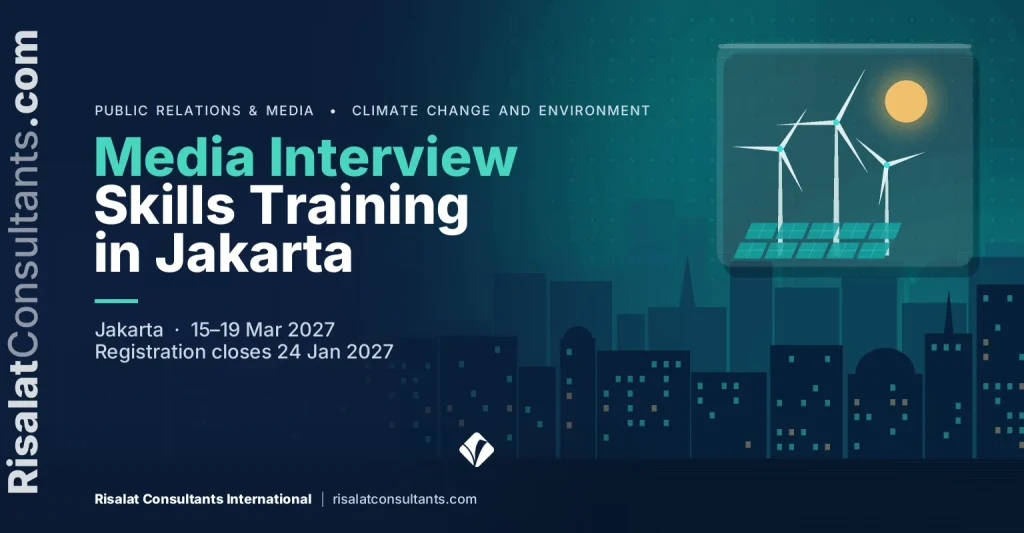
- 15–19 Mar 2027 (5 days)
- Where
- IBIS Jakarta Senen, Jakarta, Indonesia
- Fee per participant
- £2,830 (GBP)
- Payment
- By invoice and bank transfer
- Registration closes
- 24 Jan 2027
- Certificate
- Certificate of completion
- In-house option
- Run it for your team, on your dates
On this page 15 sections
Programme Overview
This practical media interview skills programme in Jakarta is designed for professionals who must turn established technical guidance into reliable institutional practice. Participants examine the decisions, evidence, controls and working relationships that determine whether improvements endure beyond an individual course.
The learning journey covers media landscape and journalist roles, spokesperson mandate and approval and audience mapping and key messages. Each topic is treated as an operational responsibility, not simply a theoretical concept.
Current primary guidance informs the programme, including WHO Health Systems Governance: accountability and communication. Participants learn to identify which requirements apply to their organisation and how to document the reasoning behind their decisions.
The programme is hosted in Jakarta, Indonesia. Case studies are adapted to the participant group; no external institutional visit, accreditation, funding allocation or regulatory endorsement is implied unless separately agreed and verified.
The Programme Strengthens Institutional Capability
- Media landscape and journalist roles
- Spokesperson mandate and approval
- Audience mapping and key messages
- Evidence checking and fact sheets
- Interview preparation and briefing notes
- Bridging and answer framing
- Difficult and hostile questioning
- On-camera voice and body language
- Microphone and remote interview practice
- Confidentiality and ethical disclosure
- Crisis communication and corrections
- Press briefing and post-interview review
- Apply a documented decision rule to media interview skills
- Review evidence and data limitations for media interview skills
- Define accountable owners and approval points for media interview skills
- Record practical risks and corrective actions for media interview skills
The emphasis is on practical templates, defensible decisions and an implementation plan that can be reviewed by a line manager.
- Collect
- Clean
- Store
- Analyse
- Decide
The Growing Importance of Media Interview Skills
Institutions are expected to show how their media interview skills arrangements work in practice. Written policies alone cannot demonstrate sound decisions, quality assurance or follow-up when responsibilities are fragmented.
Official guidance provides a useful reference point: WHO Health Systems Governance: accountability and communication. The programme converts that guidance into questions, checks and evidence that a team can use in its own operating environment.
A structured approach makes it easier to distinguish a genuine control weakness from a documentation gap, set priorities and communicate progress without relying on unsupported performance claims.
Organisations increasingly require professionals capable of:
- Media landscape and journalist roles
- Spokesperson mandate and approval
- Audience mapping and key messages
- Evidence checking and fact sheets
- Interview preparation and briefing notes
- Bridging and answer framing
- Difficult and hostile questioning
- On-camera voice and body language
- Microphone and remote interview practice
- Confidentiality and ethical disclosure
- Apply a documented decision rule to institutional performance
Strong media interview skills systems help organisations:
- Clarify decision rights and accountability
- Reduce avoidable errors and rework
- Use evidence consistently across teams
- Identify implementation risks earlier
- Make records easier to review
- Improve coordination between functions
- Prioritise limited staff time
- Support defensible reporting to leadership
- Track corrective actions to completion
The course focuses on improvements that can be implemented with realistic resources and assigned owners.
Who Should Attend This Media Interview Skills Training?
This programme is designed for:
- Government spokespeople
- Chief executives
- Communication directors
- Press officers
- Public information managers
- Crisis communication leads
- Corporate affairs managers
- Public relations advisers
- Municipal representatives
- Media liaison officers
- Project directors
- Senior technical experts
Mixed teams are welcome where technical, operational and management perspectives need to be aligned. Participants should be able to discuss a current institutional process or case.
Tick what your team needs to be able to do.
Media Interview Skills Training Objectives
Upon successful completion of this Media Interview Skills Training, participants will be able to:
- Explain the relevant official framework and its scope
- Diagnose a current institutional capability gap
- Select fit-for-purpose methods and controls
- Prepare a traceable evidence and decision record
- Design an achievable improvement plan
- Set indicators and reporting responsibilities
- Present findings clearly to senior management
- Media landscape and journalist roles
- Spokesperson mandate and approval
- Audience mapping and key messages
- Evidence checking and fact sheets
- Interview preparation and briefing notes
Each objective is tested through an exercise, peer review or practical output during the programme.
1. What should an institution do before changing its media interview skills procedures?
The official reference material on media interview skills must be interpreted in its applicable context: https://www.who.int/health-topics/health-systems-governance
2. Which output best supports implementation after training?
A documented implementation plan helps translate the principles in WHO Health Systems Governance: accountability and communication into operational practice.
3. When may a training provider claim that an external organisation endorses a course?
Publishing an official guideline does not by itself confer endorsement or accreditation.
Programme Contents and Structure
- Media landscape and journalist roles
- Spokesperson mandate and approval
- Audience mapping and key messages
- Evidence checking and fact sheets
- Interview preparation and briefing notes
- Bridging and answer framing
- Apply a documented decision rule to media environment and spokesperson readiness
- Audience mapping and key messages
- Evidence checking and fact sheets
- Interview preparation and briefing notes
- Bridging and answer framing
- Difficult and hostile questioning
- On-camera voice and body language
- Apply a documented decision rule to messages evidence and interview preparation
- Interview preparation and briefing notes
- Bridging and answer framing
- Difficult and hostile questioning
- On-camera voice and body language
- Microphone and remote interview practice
- Confidentiality and ethical disclosure
- Apply a documented decision rule to camera and microphone interview practice
- Difficult and hostile questioning
- On-camera voice and body language
- Microphone and remote interview practice
- Confidentiality and ethical disclosure
- Crisis communication and corrections
- Press briefing and post-interview review
- Apply a documented decision rule to difficult questions and crisis response
- Microphone and remote interview practice
- Confidentiality and ethical disclosure
- Crisis communication and corrections
- Press briefing and post-interview review
- Media landscape and journalist roles
- Spokesperson mandate and approval
- Apply a documented decision rule to press briefing and improvement planning
Full day-by-day contents
The five-day learning pathway moves from fundamentals to applied decisions, review and implementation.
- Day 1: Media environment and spokesperson readiness
- Day 2: Messages evidence and interview preparation
- Day 3: Camera and microphone interview practice
- Day 4: Difficult questions and crisis response
- Day 5: Press briefing and improvement planning
Full day-by-day contents
First Day | Media environment and spokesperson readiness
- Media landscape and journalist roles
- Spokesperson mandate and approval
- Audience mapping and key messages
- Evidence checking and fact sheets
- Interview preparation and briefing notes
- Bridging and answer framing
- Apply a documented decision rule to media environment and spokesperson readiness
- Review evidence and data limitations for media environment and spokesperson readiness
- Define accountable owners and approval points for media environment and spokesperson readiness
Workshop: Media environment and spokesperson readiness in practice
Working with a realistic media interview skills scenario, participants review the available records, identify the decisions that require justification and produce a practical output. The group tests assumptions, records risks and receives structured peer feedback. The result is a reusable template and a clear next step for the participant’s organisation.
Second Day | Messages evidence and interview preparation
- Audience mapping and key messages
- Evidence checking and fact sheets
- Interview preparation and briefing notes
- Bridging and answer framing
- Difficult and hostile questioning
- On-camera voice and body language
- Apply a documented decision rule to messages evidence and interview preparation
- Review evidence and data limitations for messages evidence and interview preparation
- Define accountable owners and approval points for messages evidence and interview preparation
Case Study: Messages evidence and interview preparation in practice
Working with a realistic media interview skills scenario, participants review the available records, identify the decisions that require justification and produce a practical output. The group tests assumptions, records risks and receives structured peer feedback. The result is a reusable template and a clear next step for the participant’s organisation.
Third Day | Camera and microphone interview practice
- Interview preparation and briefing notes
- Bridging and answer framing
- Difficult and hostile questioning
- On-camera voice and body language
- Microphone and remote interview practice
- Confidentiality and ethical disclosure
- Apply a documented decision rule to camera and microphone interview practice
- Review evidence and data limitations for camera and microphone interview practice
- Define accountable owners and approval points for camera and microphone interview practice
Workshop: Camera and microphone interview practice in practice
Working with a realistic media interview skills scenario, participants review the available records, identify the decisions that require justification and produce a practical output. The group tests assumptions, records risks and receives structured peer feedback. The result is a reusable template and a clear next step for the participant’s organisation.
Fourth Day | Difficult questions and crisis response
- Difficult and hostile questioning
- On-camera voice and body language
- Microphone and remote interview practice
- Confidentiality and ethical disclosure
- Crisis communication and corrections
- Press briefing and post-interview review
- Apply a documented decision rule to difficult questions and crisis response
- Review evidence and data limitations for difficult questions and crisis response
- Define accountable owners and approval points for difficult questions and crisis response
Case Study: Difficult questions and crisis response in practice
Working with a realistic media interview skills scenario, participants review the available records, identify the decisions that require justification and produce a practical output. The group tests assumptions, records risks and receives structured peer feedback. The result is a reusable template and a clear next step for the participant’s organisation.
Fifth Day | Press briefing and improvement planning
- Microphone and remote interview practice
- Confidentiality and ethical disclosure
- Crisis communication and corrections
- Press briefing and post-interview review
- Media landscape and journalist roles
- Spokesperson mandate and approval
- Apply a documented decision rule to press briefing and improvement planning
- Review evidence and data limitations for press briefing and improvement planning
- Define accountable owners and approval points for press briefing and improvement planning
Capstone Exercise: Press briefing and improvement planning in practice
Working with a realistic media interview skills scenario, participants review the available records, identify the decisions that require justification and produce a practical output. The group tests assumptions, records risks and receives structured peer feedback. The result is a reusable template and a clear next step for the participant’s organisation.
Media Interview Skills Training Methodology
Facilitated instruction is paired with guided analysis, realistic case files, group exercises and short individual reflections. Participants are encouraged to bring non-confidential examples and adapt the templates to their own procedures.
The programme combines:
- Short expert briefings
- Official framework interpretation
- Guided document review
- Practical worksheets
- Role-specific simulations
- Group problem-solving
- Case comparisons
- Peer feedback
- Facilitator demonstrations
- Decision logs
- Daily learning reflections
- Final action planning
Exercises emphasise evidence quality, transparent assumptions and the limits of what a particular source or case can establish.
- Inputs
- Activities
- Outputs
- Outcomes
- Impact
Expected Outcomes
Upon completion of this Media Interview Skills Training, participants will be able to:
- Explain the governing principles relevant to their role
- Identify the most material process weaknesses
- Use a documented checklist to assess current practice
- Prepare a decision and evidence log
- Select appropriate operational indicators
- Communicate findings to non-specialists
- Identify roles and resource needs
- Draft a phased improvement roadmap
- Plan a review of progress and unresolved risks
Participants leave with a draft improvement plan and practical working materials, rather than an unsupported claim of organisational certification.
£2,830 per participant · invoice and bank transfer · groups of 5 or more receive a discount
Five or more from one organisation: ask for the group rate on the invoice request.
Ten or more: an in-house version for your institution may cost less per person. Ask for an in-house quote.
Registration closes in 77 days (24 Jan 2027)
Institutional Application of Media Interview Skills Training
This programme supports organisations in strengthening:
- Media landscape and journalist roles
- Spokesperson mandate and approval
- Audience mapping and key messages
- Evidence checking and fact sheets
- Interview preparation and briefing notes
- Bridging and answer framing
- Difficult and hostile questioning
- On-camera voice and body language
- Microphone and remote interview practice
- Confidentiality and ethical disclosure
- Apply a documented decision rule to institutional accountability
Participants return with practical tools to improve:
- Process mapping and responsibility allocation
- Evidence and document review
- Risk and issue registers
- Quality checklists
- Management briefings
- Action plans with owners
- Performance indicators
- Peer review and escalation
- Post-training learning transfer
Teams can use the outputs in internal planning, supervision and professional development without assuming that a specific donor has allocated funds for this course.
Regional Relevance & Application
Asia
For organisations working in Asia, media interview skills capabilities can support cross-border professional learning, service delivery and institutional reporting. The exercises are adaptable to local requirements; participants must verify the standards and laws that govern their own institution.
Europe
For organisations working in Europe, media interview skills capabilities can support regulatory interpretation, documentation and accountable management. The exercises are adaptable to local requirements; participants must verify the standards and laws that govern their own institution.
Africa
For organisations working in Africa, media interview skills capabilities can support capacity-building, programme implementation and resource prioritisation. The exercises are adaptable to local requirements; participants must verify the standards and laws that govern their own institution.
Middle East
For organisations working in Middle East, media interview skills capabilities can support institutional modernisation and performance management. The exercises are adaptable to local requirements; participants must verify the standards and laws that govern their own institution.
Regional examples are illustrative learning contexts, not claims that any particular project has commissioned or financed this programme.
Host Country Profile – Indonesia
Jakarta provides an international setting for structured professional learning, peer exchange and reflection away from routine office demands. The programme retains the original advertised destination.
The training content uses official international reference material and participant case studies. No claim is made that an institution in Jakarta has endorsed the course or agreed to receive a study visit.
Travel documentation, visa eligibility, local entry rules and accommodation arrangements should be checked individually before booking. The programme team can provide administrative guidance but cannot guarantee admission or a visa.
Media Interview Skills Training Deliverables
The following learning and participation services form the standard Risalat programme package, subject to the participant agreement and final logistical confirmation.
Before the Programme
- Participant Pre-Assessment
- Media Interview Skills Readiness Assessment
- Media Interview Skills Resource Pack
- Preparatory Reading Materials
- Complimentary Visa Support & Advisory
During the Programme
- Airport Pickup & Welcome Assistance
- Accommodation with Breakfast
- Welcome Networking Dinner
- Risalat Training Kit (Bag, Bottle, Mug, T-Shirt, Cap, Passport Cover, Pens, Notebook, Magnet & Keychain)
- Comprehensive Media Interview Skills Training Manual
- Assessment checklist
- Decision log template
- Risk and action register
- Evidence review worksheet
- Management briefing template
- Practical Workshops & Simulations
- Group Discussions & Peer Learning
- Daily Lunch and Refreshments
- Full Access to Training Venue Facilities
- Mini Pad / Tablet with Digital Learning Materials
- Field Visit (where applicable, subject to confirmation)
- Entertaining City Tour
After the Programme
- Certificate of Completion
- Risalat Programme Participation Recognition Award
- Post-Training Reference Materials
- Personal improvement roadmap
- Institutional action tracker
- Post-training reflection checklist
- Post-Training Support & Follow-Up Guidance
- Programme Report
Institutions may request a tailored in-house version through the Risalat proposal request form.
Common Challenges in Media Interview Skills, And How This Training Helps
How can our team identify the most urgent capability gaps?
Day 1 addresses this challenge through a guided exercise on media environment and spokesperson readiness. Participants use a checklist, discuss competing choices and document an action that can be tested in their own institution.
How can we interpret official guidance consistently?
Day 2 addresses this challenge through a guided exercise on messages evidence and interview preparation. Participants use a checklist, discuss competing choices and document an action that can be tested in their own institution.
How can we improve decisions without adding unnecessary bureaucracy?
Day 3 addresses this challenge through a guided exercise on camera and microphone interview practice. Participants use a checklist, discuss competing choices and document an action that can be tested in their own institution.
How can we demonstrate that evidence is reliable?
Day 4 addresses this challenge through a guided exercise on difficult questions and crisis response. Participants use a checklist, discuss competing choices and document an action that can be tested in their own institution.
How can we involve technical and management colleagues effectively?
Day 5 addresses this challenge through a guided exercise on press briefing and improvement planning. Participants use a checklist, discuss competing choices and document an action that can be tested in their own institution.
How can we turn training into an institutional action plan?
Day 5 addresses this challenge through a guided exercise on press briefing and improvement planning. Participants use a checklist, discuss competing choices and document an action that can be tested in their own institution.
How can we monitor improvements after participants return?
Day 5 addresses this challenge through a guided exercise on press briefing and improvement planning. Participants use a checklist, discuss competing choices and document an action that can be tested in their own institution.
Explore further professional development options through Risalat programme categories and use the training needs assessment to prioritise team learning requirements.
Frequently Asked Questions
Who is this programme intended for?
It is intended for professionals responsible for media interview skills decisions, supervision or reporting.
Is previous experience required?
Professional familiarity is useful. A pre-assessment helps tailor the level of practical exercises.
Are institutional visits guaranteed?
No. Any external visit depends on host approval, access and logistics and is confirmed separately.
What will participants take back to work?
Templates, case notes, a documented action plan and post-training reference materials.
Can the programme be delivered in-house?
Yes. Risalat can adapt the content to an institutional team and its operational priorities.
Training courses in JakartaPublic Relations & Media training courses
Why Jakarta for this programme
Jakarta is a large public sector market with many donor-funded programmes.
The Media Interview Skills Training in Jakarta programme in March 2027 brings together officials and professionals from across the Asia region and beyond. Sessions combine short inputs, case studies and group work on participants' own files, and the city's institutions can be added as a study visit on request.
Getting there: Soekarno-Hatta (CGK).
Check whether you need a visa with the free Visa Checker, and ask for an invitation letter once you are registered.
The same topic in other cities
Other programmes in Jakarta
More training courses in Indonesia · All programmes in Asia · Full training calendar