Programme Overview
PPP Project Finance & Infrastructure Training plays a critical role in enabling infrastructure development where public finance alone is insufficient. Public-Private Partnerships (PPPs) combine public oversight with private capital and expertise to bridge fiscal gaps, enhance service delivery, and accelerate socio-economic development.
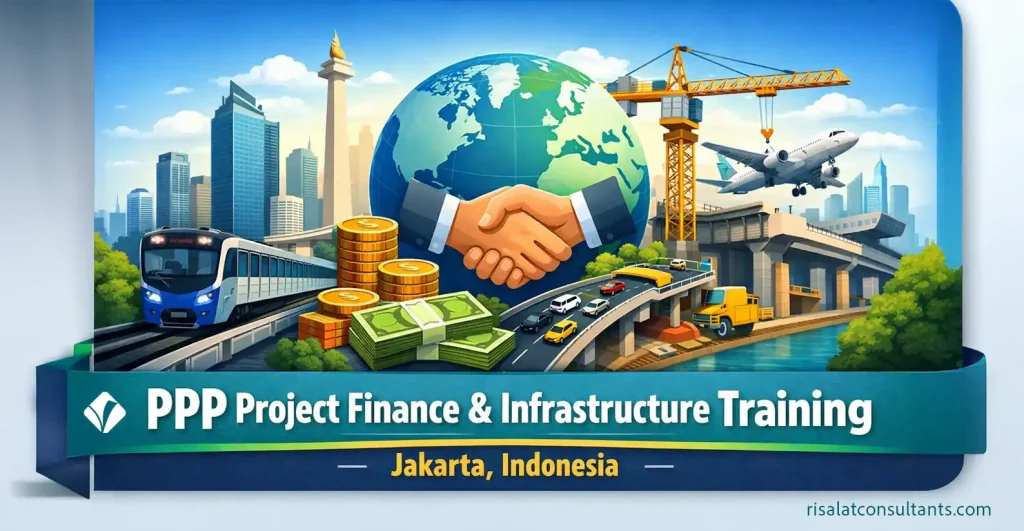
The PPP Project Finance & Infrastructure Training is a comprehensive capacity-building programme designed to equip participants with the knowledge and practical skills needed to structure, finance, appraise, and implement successful PPP projects. The curriculum covers core principles of PPPs, financial structuring, risk analysis, contract documentation, and practical case applications, ensuring participants are prepared to support sustainable infrastructure development.
This training bridges theoretical foundations with real-world practice, enabling professionals to make informed decisions that balance public interest with financial viability in PPP initiatives.
The role of sustainability in infrastructure planning and financing is essential for long-term viability. For insights into integrating environmental and social resilience in infrastructure, see our Sustainability in Infrastructure Development resource.
This training aligns with global capacity-building efforts such as the Public‑Private Infrastructure Advisory Facility (PPIAF), a multi-donor initiative supporting governments in strengthening PPP frameworks and preparing bankable infrastructure projects.
Participants will explore infrastructure finance strategies similar to those examined in our Funding the Infrastructure in Africa resource, which discusses regional infrastructure financing models and investment considerations.
Watch this short overview video to explore how PPP Project Finance & Infrastructure Training equips professionals to structure bankable infrastructure projects and manage PPP risks in real-world contexts.
Explore This Programme
Interactive overview
- What is a PPP?
- Core principles and rationale for PPPs
- Roles of public and private sectors in PPPs
- Advantages and limitations of PPP arrangements
- Regional and global comparisons of PPP deployment
- Tendering basics and bidding considerations
- Major risk categories in PPP projects
- Risk identification and impact assessment
- Allocating risks between stakeholders
- Developing risk matrices and mitigation approaches
- Role of capital markets and insurance in risk management
- Quantitative analysis and cash-flow forecasting
- Sources of PPP project finance
- Regulatory frameworks and enforceability issues
- Financing structures and gearing considerations
- Credit enhancement and viability gap support
- Syndications, refinancing options, and term sheets
- Role of export credits, multilateral lenders, and project bonds
- Financial modeling techniques (DCF, NPV, IRR)
- Performance indicators and contract metrics
- EPC and construction contract basics
- Operations, maintenance, and concession contracts
- Loan covenants and security agreements
- Tripartite and stakeholder agreement structures
- Interactive lectures and expert presentations
- Case studies from international PPP projects
- Group discussions and role play simulations
- Financial analysis exercises and risk modeling
- Interactive Q&A and participant problem solving
Tick what your team needs to be able to do.
Target Audience
This PPP Project Finance & Infrastructure Training is ideal for professionals involved in infrastructure finance, project delivery, investment, and regulatory oversight, including:
- Heads of Project, Corporate & Structured Finance
- Treasurers, Accountants & Financial Analysts
- Project Managers & Developers
- Sales Managers and Business Development Leads
- Government officials and public sector planners
- Procuring authorities promoting infrastructure services
- Public financial agencies and audit/supervision bodies
- Consultants and advisors in infrastructure and PPP finance
Objectives ofPPP Project Finance & InfrastructureTraining
By the end of this training, participants will be able to:
- Understand the fundamental role and benefits of PPPs in infrastructure development
- Distinguish between available PPP models and concession structures
- Analyze financial, commercial, legal, and regulatory aspects of PPPs
- Evaluate funding structures and sources relevant to PPP projects
- Identify and manage key risks across the project lifecycle
- Apply effective methodologies for deploying successful PPP transactions
- Enhance decision-making for project financing, negotiation, and stakeholder engagement
Programme Contents
First Day | Introduction to PPP Frameworks
- What is a PPP?
- Core principles and rationale for PPPs
- Roles of public and private sectors in PPPs
- Advantages and limitations of PPP arrangements
- Regional and global comparisons of PPP deployment
- Tendering basics and bidding considerations
- Output-focused contracting and risk allocation
- Negotiating strategies and contract fundamentals
Second Day | PPP Risk Analysis & Mitigation
- Major risk categories in PPP projects
- Risk identification and impact assessment
- Allocating risks between stakeholders
- Developing risk matrices and mitigation approaches
- Role of capital markets and insurance in risk management
- Quantitative analysis and cash-flow forecasting
Third Day | PPP Project Financing
- Sources of PPP project finance
- Regulatory frameworks and enforceability issues
- Financing structures and gearing considerations
- Credit enhancement and viability gap support
- Syndications, refinancing options, and term sheets
- Role of export credits, multilateral lenders, and project bonds
Fourth Day | PPP Appraisal & Documentation
- Financial modeling techniques (DCF, NPV, IRR)
- Performance indicators and contract metrics
- EPC and construction contract basics
- Operations, maintenance, and concession contracts
- Loan covenants and security agreements
- Tripartite and stakeholder agreement structures
Fifth Day | Practical Knowledge Reinforcement
PPP Project Finance & InfrastructureTraining Methodology
The PPP Project Finance & Infrastructure Training methodology focuses on practical financial structuring, risk allocation, and implementation skills for real infrastructure projects, using a highly practical adult-learning approach combining:
- Interactive lectures and expert presentations
- Case studies from international PPP projects
- Group discussions and role play simulations
- Financial analysis exercises and risk modeling
- Interactive Q&A and participant problem solving
Host Country Profile
Indonesia has made sustained efforts to expand private sector participation in infrastructure development through formal PPP frameworks and regulatory reform. The government has institutionalized PPP arrangements and continues to promote them across sectors such as transportation, energy, and public services. According to the Asian Development Bank, Indonesia has implemented numerous PPP projects and expects a significant portion of infrastructure investment to involve a combination of public and private finance.
Hosting this programme in Jakarta, Indonesia’s economic and administrative capital, enables participants to connect theoretical PPP concepts with local practices and regional infrastructure priorities.
PPP models often support major urban infrastructure investments. For a deeper look at integrated, sustainable planning of urban systems, see our Urban Infrastructure Planning & Sustainable Development resource.
For a deeper understanding of project design and structuring in major infrastructure markets, participants can also reference our PPP Project Finance & Infrastructure Programme in Jakarta, which showcases practical applications of the concepts covered here.
Expected Outcomes – PPP Project Finance & Infrastructure
By the end of this training, participants will be able to:
- Articulate the value and structure of PPP arrangements
- Assess PPP feasibility and financial structuring options
- Develop risk-aware investment frameworks
- Interpret regulatory and contractual documentation
- Apply best practices in PPP negotiation and implementation
- Provide strategic recommendations for infrastructure finance solutions
- Apply PPP Project Finance & Infrastructure frameworks to evaluate, structure, and implement infrastructure investments
Course Deliverables
Before the Programme
- Pre-training needs assessment and briefing
- Preparatory reading materials on PPP fundamentals
- Pre-course orientation and logistics guidance
During the Programme
- Accommodation with breakfast
- Welcome networking session
- Comprehensive course manual and analytical tools
- Case studies and practical finance templates
- Interactive exercises and expert presentations
- Daily lunch and refreshments
- Certificate of Completion
After the Programme
- Post-training reference materials
- Guidance on applying PPP concepts in professional contexts
- Continued engagement and access to future programmes
For customized delivery or in-country implementation of this PPP Project Finance & Infrastructure Training, contact our team for tailored programmes.