Programme Overview
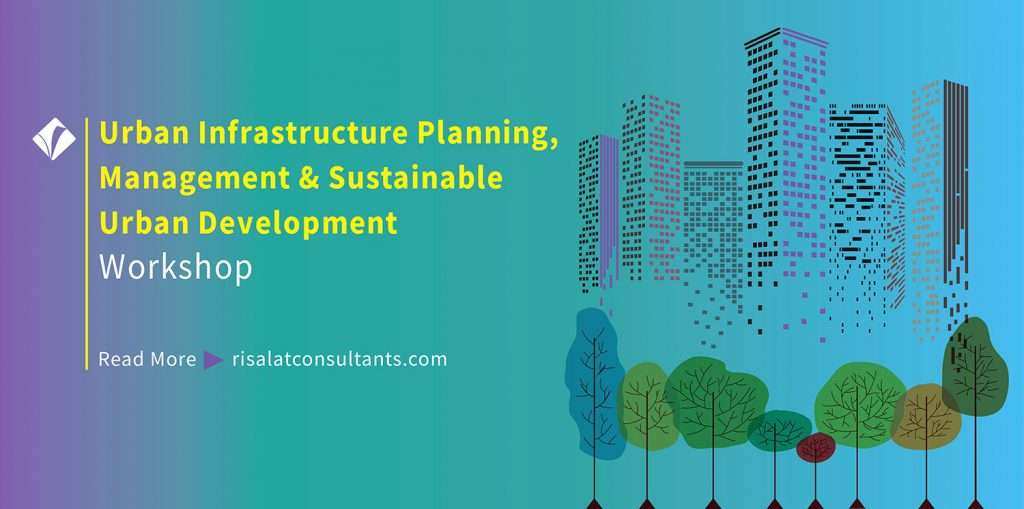
Urban infrastructure planning and sustainable development have become central priorities for governments, city authorities, and development partners as cities face rapid population growth, climate pressures, resource constraints, and rising demand for resilient services. Poorly coordinated infrastructure and city systems decisions can lead to congestion, environmental degradation, fiscal stress, and long-term urban vulnerability.
This training programme is designed to equip participants with practical frameworks and tools to plan, design, and manage urban infrastructure systems that are inclusive, resilient, and aligned with sustainable development objectives. The programme focuses on integrated urban planning approaches that connect transport, housing, utilities, land use, climate resilience, and economic development.
The training bridges the gap between infrastructure planning theory and real-world urban decision-making. Participants gain hands-on exposure to strategic planning methods, project prioritization, governance models, and sustainability principles applicable to cities in developing, emerging, and transition economies.
This Urban Infrastructure Planning & City Systems Training supports cities in strengthening integrated planning, governance, and sustainable infrastructure delivery.
Watch the video below for a practical perspective on integrated urban infrastructure planning and sustainable city development.
Target Audience
This training is designed for professionals responsible for city systems, infrastructure governance, public services, and sustainable urban development.
- Urban planners and city development officials
- Infrastructure and public works managers
- Transport, housing, water, and energy sector professionals
- Municipal engineers and technical advisors
- Policy makers and regulatory authority staff
- Project and programme managers in donor-funded urban projects
- Consultants working in urban development and infrastructure
- Staff of ministries responsible for cities, infrastructure, and regional development
Programme Objectives
The programme emphasizes strategic infrastructure planning, sustainability, and long-term urban performance across public sector and donor-funded environments.
- Understand integrated urban infrastructure planning principles
- Align infrastructure investments with sustainable development goals
- Apply land-use, transport, and service integration approaches
- Assess infrastructure demand, capacity, and long-term urban growth needs
- Incorporate climate resilience and environmental sustainability into planning
- Prioritize infrastructure projects using economic, social, and environmental criteria
- Strengthen governance, coordination, and stakeholder engagement in urban planning
- Improve decision-making for sustainable, inclusive, and resilient cities
Programme Contents – Integrated Urban Infrastructure & City Systems
- Land-use planning and spatial development frameworks
- Urban transport systems and mobility planning
- Transit-oriented development (TOD) concepts
- Infrastructure density, accessibility, and service equity
- Managing informal settlements and service expansion
- Climate risks and urban vulnerability assessment
- Resilient infrastructure design principles
- Green infrastructure and nature-based solutions
- Energy efficiency, water management, and waste systems
- Environmental and social safeguards in urban projects
- Infrastructure investment planning and sequencing
- Cost-benefit analysis and economic appraisal
- Public investment management and donor financing
- Public-private partnerships (PPPs) in urban infrastructure
- Risk management, procurement, and contract considerations
- Translating plans into implementable projects
- Monitoring infrastructure performance and outcomes
- Data, indicators, and urban analytics for decision-making
- Stakeholder engagement and political economy of cities
- Action planning for participants’ cities and institutions
Full day-by-day contents
The urban infrastructure planning curriculum follows an integrated, systems-based approach aligned with sustainable urban development principles.
First Day | Urban Infrastructure Planning Foundations
- Urbanization trends and infrastructure challenges
- Role of infrastructure in sustainable urban development
- Integrated urban systems: transport, housing, utilities, and land use
- Infrastructure planning vs. project-by-project approaches
- Governance and institutional coordination in cities
Second Day | Land Use, Mobility & Service Integration
- Land-use planning and spatial development frameworks
- Urban transport systems and mobility planning
- Transit-oriented development (TOD) concepts
- Infrastructure density, accessibility, and service equity
- Managing informal settlements and service expansion
This planning curriculum intersects clean mobility and sustainable transport approaches explored in our Clean Transport and Urban Sustainability Training, highlighting how mobility systems contribute to integrated urban infrastructure.
Third Day | Sustainable & Climate-Resilient Infrastructure
- Climate risks and urban vulnerability assessment
- Resilient infrastructure design principles
- Green infrastructure and nature-based solutions
- Energy efficiency, water management, and waste systems
- Environmental and social safeguards in urban projects
Climate resilience and urban water system planning are explored further in our Climate Change Adaptation & Integrated Water Resource Management Training, which complements infrastructure resilience and risk-informed urban planning.
The programme also connects with broader urban innovation concepts such as integrated digital infrastructure, data-driven planning, and smart city systems, as explored in our Smart Cities resource.
Integrated urban service delivery also includes solid waste systems, as addressed in our
Sustainable Integrated Waste Management Workshop & Exposure, which focuses on municipal waste infrastructure and circular service models.
Fourth Day | Infrastructure Financing, Prioritization & Governance
- Infrastructure investment planning and sequencing
- Cost-benefit analysis and economic appraisal
- Public investment management and donor financing
- Public-private partnerships (PPPs) in urban infrastructure
- Risk management, procurement, and contract considerations
Participants may also explore advanced concepts in urban transformation and smart city innovation through our Smart Cities and Urban Transformation Training & Study Tour, which complements strategic planning with emerging digital and governance frameworks.
Fifth Day | Implementation, Monitoring & Urban Transformation
- Translating plans into implementable projects
- Monitoring infrastructure performance and outcomes
- Data, indicators, and urban analytics for decision-making
- Stakeholder engagement and political economy of cities
- Action planning for participants’ cities and institutions
Training Methodology – Urban Infrastructure & City Systems
The methodology supports applied learning in Urban Infrastructure Planning & City Systems Training, sustainable development, and integrated city management.
- Interactive lectures and policy discussions
- Real-world urban infrastructure case studies
- Group exercises and planning simulations
- Scenario analysis and problem-solving workshops
- Practical tools, templates, and planning frameworks
- Peer exchange among urban professionals
Host Country Profile
Japan is a global leader in urban infrastructure planning, resilience, and sustainable development. With advanced transport systems, integrated land-use planning, and strong disaster risk management, the country offers valuable lessons for modern cities. Japan’s leadership in urban infrastructure planning and resilience is supported by national frameworks and policies led by the Ministry of Land, Infrastructure, Transport and Tourism (MLIT), which oversees transport systems, land-use planning, and sustainable urban development nationwide.
Yokohama is internationally recognized for its smart urban planning, sustainable mobility, and waterfront redevelopment. Hosting the programme in Yokohama allows participants to learn from real-world applications of coordinated infrastructure planning, sustainability strategies, and effective urban governance within a highly advanced urban environment.
Course Deliverables
Participants will benefit from a full-service training experience covering all phases of the programme:
Before the Programme
- Pre-training assessment focused on urban infrastructure challenges
- Programme briefing and preparatory reading materials
- Overview of sustainable urban planning frameworks
- Logistical and visa guidance (where applicable)
During the Programme
- Accommodation with breakfast
- Welcome networking session with fellow participants
- Comprehensive course manual and training materials
- Urban infrastructure and city systems planning tools, templates, and practical frameworks
- Case studies, group exercises, and applied planning simulations
- Mini pad / tablet provided for convenient access to digital materials, planning tools, and case studies (participants may keep it after the programme)
- Daily lunch and refreshments during training days
- Full access to training venue facilities
- Certificate of Completion
After the Programme
- Post-training reference materials
- Guidance on applying learning outcomes in urban planning contexts
- Continued engagement through future infrastructure and development programmes
£4,650 per participant · invoice and bank transfer · groups of 5 or more receive a discount
Five or more from one organisation: ask for the group rate on the invoice request.
Ten or more: an in-house version for your institution may cost less per person. Ask for an in-house quote.
Registration closes in 66 days (23 Dec 2026)