Key takeaways
- What the evidence and original article tell us. The original Risalat article identifies several useful building blocks, but an update must distinguish enduring principles from time-sensitive rankings, targets and technology claims.
- Customer discovery. Customer discovery requires more than a general policy commitment.
- Product design and experimentation. Product design and experimentation requires more than a general policy commitment.
- Operations and productivity. Operations and productivity requires more than a general policy commitment.
- Trust and data rights. Trust and data rights requires more than a general policy commitment.
In short: AI can lower the cost of testing ideas and supporting customers, but startups still need a real market, reliable data and a sustainable business model. The practical question is which institutional decisions, operating routines and safeguards are needed to produce results that can be independently checked.
What the evidence and original article tell us
Core concepts and what has changed
The original Risalat article identifies several useful building blocks, but an update must distinguish enduring principles from time-sensitive rankings, targets and technology claims. Historical examples can illustrate an approach; they should not be presented as proof that a current target was met. The source references below provide a starting point for checking contemporary policy and technical guidance.
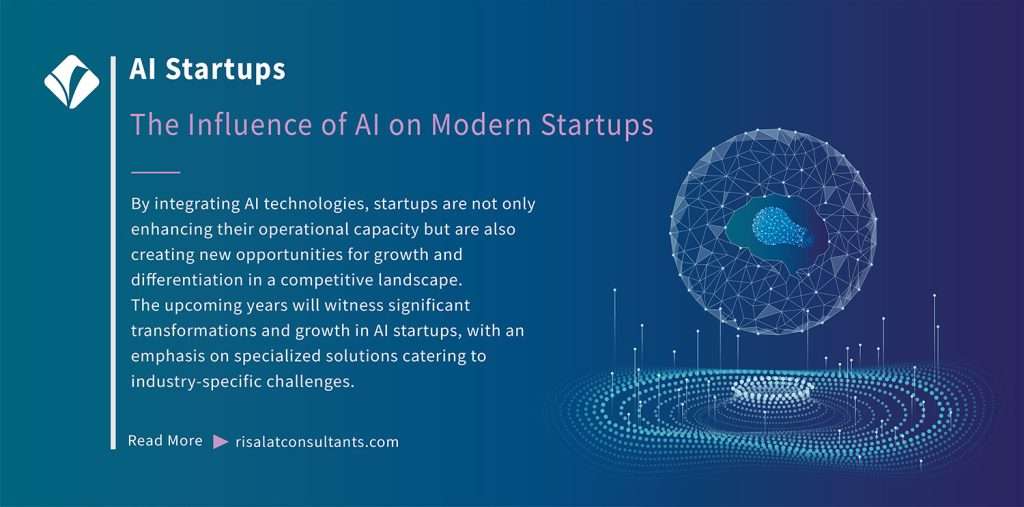
Artificial Intelligence (AI) is not just a buzzword but a significant force across various sectors, particularly in the startup ecosystem. It has been reshaping nearly all industries, propelling startups towards innovation and efficiency. By integrating AI technologies, startups are not only enhancing their operational capacity but are also creating new opportunities for growth and differentiation in a competitive landscape. The upcoming years will witness significant transformations and growth in AI startups, with an emphasis on specialized solutions catering to industry-specific challenges.
Here is how AI impacts various domains:. • Healthcare and Wellness: • Patient Care and Diagnostics: AI is enhancing patient care by enabling more accurate diagnostics and personalized treatment plans. Through the use of AI-driven analytics, healthcare startups are able to predict patient outcomes more effectively. • Wearables and Apps: AI-enabled wearables and smartphone applications are at the forefront of proactive health management, monitoring vital signs, and suggesting lifestyle adjustments in real-time. • Fintech and Financial Services: • Fraud Detection and Risk Assessment: By leveraging AI, fintech startups are revolutionizing the way financial transactions are monitored and analyzed, significantly reducing the risk of fraudulent activities. • Personalized Financial Advice: AI-driven robo-advisors and chatbots are providing users with personalized investment recommendations and 24/7 customer support, making financial advice more accessible. • Retail and E-commerce: • Personalized Shopping Experiences: AI startups are able to offer tailored shopping experiences by analyzing cu
Essential AI Technologies for Startups.
Define the decision before choosing the tool
For how ai is changing startups: opportunities and risks, the first task is to define the decision that needs improvement. A useful problem statement names the service or process, the people affected, the current failure mode, and the evidence needed to show progress. This prevents a project from equating the purchase of software, equipment or consultancy services with a measurable public benefit.
Governance responsibilities
Establish a steering owner who can resolve conflicts across functions, a delivery manager who maintains the implementation record, and an independent assurance route for material risks. Define what each party may approve and how unresolved matters reach senior management. Without decision rights, committees can record problems repeatedly while implementation stalls.
Customer discovery
Operational choices and trade-offs
Customer discovery requires more than a general policy commitment. Leaders should identify the operational owner, required skills, minimum data quality and maintenance costs before selecting an intervention. A decision note should compare the status quo, a low-cost process change and a more substantial investment. The comparison should consider who benefits, who bears the cost, and which assumptions could invalidate the business case.
Where multiple agencies or contractors participate, specify how information and responsibilities pass between them. A shared register of decisions, dependencies and unresolved issues is often more useful than another dashboard. Governance arrangements should make it possible to identify the person authorised to accept a risk, release a payment or change a service standard.
Practical example and verification questions
Consider an agency piloting an improvement related to customer discovery. Rather than deploying it across the organisation immediately, the team selects one service area, records the baseline, tests the intervention with staff and affected users, and logs each exception. It then checks whether performance improved without shifting the burden to another department or excluding people with limited access.
The project manager should ask: What is the measurable baseline? Which data can be independently verified? What would failure look like? What is the recurrent cost after external support ends? Who has authority to change the process? What safeguard protects affected people? Answers to these questions should appear in the business case and the monitoring plan.
For startups navigating the competitive landscape of modern business, integrating Artificial Intelligence (AI) technologies is not just an advantage but a necessity. Below are some of essential AI technologies that are reshaping the startup ecosystem: • Computer Vision: • Applications: Image recognition, object detection, facial recognition. • Benefits: Enhances user experience in apps, improves security systems, and streamlines quality control in manufacturing. • Natural Language Processing (NLP): • Applications: Sentiment analysis, text summarization, machine translation. • Benefits: Powers chatbots for better customer service, automates content generation, and facilitates global communication. • Machine Learning (ML): • Applications: Predictive analytics, customer behavior prediction. • Benefits: Drives personalized marketing strategies, optimizes business operations, and enhances decision-making processes.
Deep Learning, a subset of ML, is particularly noteworthy for its ability to process unstructured data such as images, video, and text. This technology is instrumental in developing sophisticated AI applications like image and speech recognition systems.
Procurement and contract design
Translate intended outcomes into testable requirements. Ask bidders to explain interoperability, accessibility, support, exit arrangements and the evidence they will provide at acceptance. Avoid specifying a proprietary product where functional requirements would allow competition. For complex procurements, evaluate whole-life cost and the institution’s ability to manage the contract.
Product design and experimentation
Operational choices and trade-offs
Product design and experimentation requires more than a general policy commitment. Leaders should identify the operational owner, required skills, minimum data quality and maintenance costs before selecting an intervention. A decision note should compare the status quo, a low-cost process change and a more substantial investment. The comparison should consider who benefits, who bears the cost, and which assumptions could invalidate the business case.
Where multiple agencies or contractors participate, specify how information and responsibilities pass between them. A shared register of decisions, dependencies and unresolved issues is often more useful than another dashboard. Governance arrangements should make it possible to identify the person authorised to accept a risk, release a payment or change a service standard.
Practical example and verification questions
Consider an agency piloting an improvement related to product design and experimentation. Rather than deploying it across the organisation immediately, the team selects one service area, records the baseline, tests the intervention with staff and affected users, and logs each exception. It then checks whether performance improved without shifting the burden to another department or excluding people with limited access.
The project manager should ask: What is the measurable baseline? Which data can be independently verified? What would failure look like? What is the recurrent cost after external support ends? Who has authority to change the process? What safeguard protects affected people? Answers to these questions should appear in the business case and the monitoring plan.
A practical checklist is to document the owner, budget, evidence source, control, escalation route and review date for every major action. If one of these is missing, the activity is not yet ready for scale. The checklist can be incorporated into existing management systems rather than introduced as a separate reporting burden.
Capacity and sustainability
Training should follow an assessment of tasks staff actually perform. A useful plan distinguishes awareness, specialist capability and supervisory responsibility. Staff need protected time to practise, clear operating procedures and access to support after a supplier or external consultant leaves. Record capability gains through observed work rather than attendance alone.
Operations and productivity
Operational choices and trade-offs
Operations and productivity requires more than a general policy commitment. Leaders should identify the operational owner, required skills, minimum data quality and maintenance costs before selecting an intervention. A decision note should compare the status quo, a low-cost process change and a more substantial investment. The comparison should consider who benefits, who bears the cost, and which assumptions could invalidate the business case.
Where multiple agencies or contractors participate, specify how information and responsibilities pass between them. A shared register of decisions, dependencies and unresolved issues is often more useful than another dashboard. Governance arrangements should make it possible to identify the person authorised to accept a risk, release a payment or change a service standard.
Practical example and verification questions
Consider an agency piloting an improvement related to operations and productivity. Rather than deploying it across the organisation immediately, the team selects one service area, records the baseline, tests the intervention with staff and affected users, and logs each exception. It then checks whether performance improved without shifting the burden to another department or excluding people with limited access.
The project manager should ask: What is the measurable baseline? Which data can be independently verified? What would failure look like? What is the recurrent cost after external support ends? Who has authority to change the process? What safeguard protects affected people? Answers to these questions should appear in the business case and the monitoring plan.
Monitoring and learning
Use a small set of indicators that answer management questions. Separate inputs, outputs, service outcomes and unintended consequences. Where attribution is difficult, explain the contribution of the intervention and competing explanations. Schedule reviews early enough to change course before the budget or contract is exhausted.
Trust and data rights
Operational choices and trade-offs
Trust and data rights requires more than a general policy commitment. Leaders should identify the operational owner, required skills, minimum data quality and maintenance costs before selecting an intervention. A decision note should compare the status quo, a low-cost process change and a more substantial investment. The comparison should consider who benefits, who bears the cost, and which assumptions could invalidate the business case.
Where multiple agencies or contractors participate, specify how information and responsibilities pass between them. A shared register of decisions, dependencies and unresolved issues is often more useful than another dashboard. Governance arrangements should make it possible to identify the person authorised to accept a risk, release a payment or change a service standard.
Practical example and verification questions
Consider an agency piloting an improvement related to trust and data rights. Rather than deploying it across the organisation immediately, the team selects one service area, records the baseline, tests the intervention with staff and affected users, and logs each exception. It then checks whether performance improved without shifting the burden to another department or excluding people with limited access.
The project manager should ask: What is the measurable baseline? Which data can be independently verified? What would failure look like? What is the recurrent cost after external support ends? Who has authority to change the process? What safeguard protects affected people? Answers to these questions should appear in the business case and the monitoring plan.
Inclusion and complaints
Test the design with people who experience the greatest access barriers, including those with disabilities, limited connectivity or language needs. Maintain a workable offline route where services are essential. Explain how complaints are received, protected, investigated and used to improve service quality.
Application in public agencies and donor-funded projects
How ministries and implementing agencies should proceed
A ministry or project implementation unit should translate the strategy into a funded delivery plan with named owners. Start with a baseline, a small number of outcome indicators and an agreed reporting cycle. Check legal mandates, procurement thresholds, environmental and social obligations, data protection requirements and the conditions of the financing agreement before committing funds.
A useful implementation file contains a problem statement, options appraisal, stakeholder map, risk register, procurement plan, cost estimate, results framework and a schedule for management review. Evidence should distinguish activities completed from benefits actually experienced by service users.
Example: a 90-day improvement cycle
Days 1 to 30: interview frontline teams and users, verify the baseline, map the process and identify the main bottleneck. Days 31 to 60: test one proportionate intervention, document exceptions and track cost and service performance. Days 61 to 90: compare results with the baseline, publish lessons, assign corrective actions and decide whether to adapt, stop or expand the pilot. This is an illustrative management sequence, not a claim about a specific financed project.
What to check before scaling
Readiness checklist
- Confirm the public problem and establish a defensible baseline.
- Verify applicable legislation, policy, standards and funding conditions.
- Assess accessibility, distributional effects and safeguards.
- Cost implementation, maintenance, staff time and independent assurance.
- Assign accountable owners and a realistic monitoring schedule.
- Pilot, evaluate, correct and publish a decision on scale-up.
Evidence and limitations
The sources listed with this article are institutional starting points for checking the policy and technical context. The scenarios and checklists above are illustrative recommendations. They are not evidence that a particular country, ministry or project has adopted them. Historical claims in the original article, especially dated rankings and projections, should be checked against the latest primary data before they are reused.
Frequently Asked Questions
What is the main objective of how ai is changing startups: opportunities and risks?
AI can lower the cost of testing ideas and supporting customers, but startups still need a real market, reliable data and a sustainable business model.
What should an organisation assess first?
Start with a documented problem, baseline, responsible owner, user needs, legal requirements and the cost of doing nothing.
How can managers judge whether a pilot worked?
Compare outcomes with a credible baseline, check unintended effects, verify costs and gather feedback from the people using the service.
What are the main implementation risks?
Common risks include poor data, unclear accountability, weak procurement, insufficient staff capability, exclusion and unfunded maintenance.
How does this apply to donor-funded projects?
Project teams should connect the intervention to approved results, procurement arrangements, safeguards, reporting obligations and independent verification.
- Open Contracting Partnership Open Contracting Partnership
- OECD (Organisation for Economic Co-operation and Development) OECD
- Environmental and Social Framework (ESF) World Bank
Know people who should read this? Become a Risalat Ambassador or write an article with Risalat under your own name.
Partners in project success since 2011, diagnostics, advisory support and applied learning for ministries, public agencies and project teams.
Need help putting this into practice?
Start with a free 10-minute diagnostic or talk to our experts.