Key facts
- Dates
- 15–19 Feb 2027 (5 days)
- Where
- Best Western Hotel Ikibin-2000, Ankara, Türkiye
- Fee per participant
- £2,870 (GBP)
- Payment
- By invoice and bank transfer
- Registration closes
- 6 Jan 2027
- Who it is for
- The programme suits experienced professionals as well as those moving into new responsibilities. Groups that mix institutions and countries are enc…
- Certificate
- Certificate of completion
- In-house option
- Run it for your team, on your dates
On this page 12 sections
Programme Overview
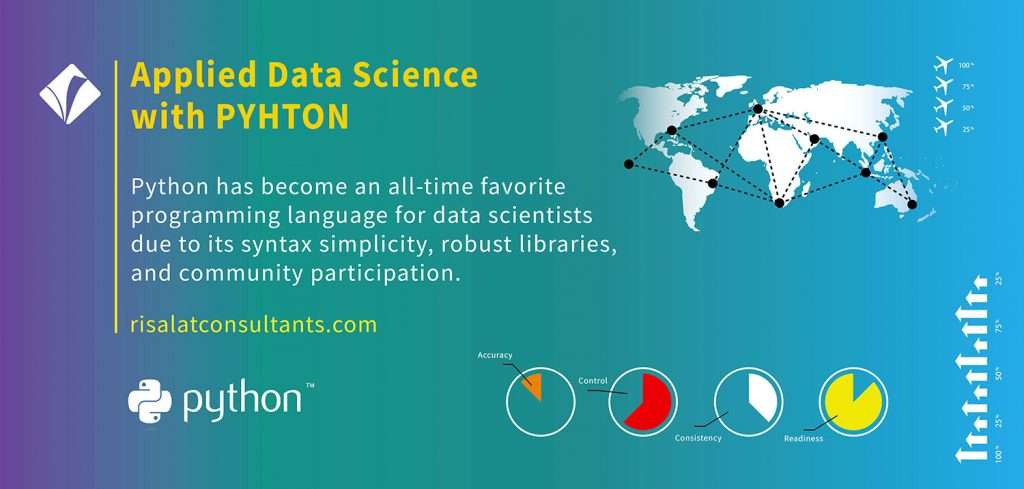
Over the last few decades, the amount of generated and retained data by the companies has skyrocketed. Understanding data has become great challenge but even a greater opportunity for contemporary businesses. While trying to derive meaningful insights from sets of big data, Python has become an all-time favorite programming language for data scientists due to its syntax simplicity, robust libraries and community participation. This Data Science course with Python features core concepts of exploratory data science, statistics, hypothesis testing, regression classification modelling techniques, data visualization and machine learning algorithms. This programme will allow you to master the concepts of Python programming and essential tools of Data Science with Python.
Delivered by Risalat Consultants International in Ankara, Türkiye, it combines expert-led sessions, real cases and group work, so that participants can apply what they learn in their own institution.
The programme strengthens institutional capability in:
- Introduction to data science
- Data Science tools and technologies
- Life Cycle of Data science projects
- Data Analytics Overview
- Statistical Analysis and Business Applications
- Introduction to Python and its essentials
- Python Environment Setup
- Mathematical Computing with Python (NumPy)
- Digital strategy and transformation planning
- Data governance and data quality
- Data analysis and visualisation
- Cybersecurity basics and risk management
It is designed for software and Data Engineers, data Scientists, data Analysts and others who want practical, current skills in digital government, data and technology.
Why Applied Data Science with PYHTON Matters Now
Digital services, data and new technologies are changing how institutions work and how citizens are served. Done well, they make services faster, cheaper and more transparent; done badly, they waste money and expose data to risk.
Institutions need people who can plan digital change, manage data responsibly, protect systems and use evidence from data in decisions. These skills are now expected across all functions, not only in IT.
This Applied Data Science with PYHTON programme brings these elements together in a practical format, so that participants understand not only what good practice looks like but also how to introduce it in their own setting, with the people and resources they have.
Institutions increasingly need professionals who can:
- Plan digital initiatives that solve real problems
- Manage data quality, protection and sharing
- Analyse data and present it clearly
- Manage cyber and technology risks
- Lead people through digital change
Strong capability helps institutions:
- Deliver faster and more accessible services
- Make better use of data in decisions
- Protect systems and personal data
- Get value from technology investments
Who Should Attend This Applied Data Science with PYHTON Training
The programme suits experienced professionals as well as those moving into new responsibilities. Groups that mix institutions and countries are encouraged, because participants learn a great deal from each other’s experience.
This programme is designed for:
- Software and Data Engineers
- Data Scientists
- Data Analysts
- Economists or Researchers
- Functional Executives and Senior Level Managers
- Anyone interested in Python programming and its applications in data science
- ICT managers and officers
- Digital transformation leads
- Data analysts and statisticians
- Information security officers
- Policy and planning officers
- Project and programme managers
Tick what your team needs to be able to do.
Programme Objectives
The objectives focus on what participants will be able to do after the programme, not only on what they will know. Each one is practised during the week through exercises, cases or group work.
By the end of this programme participants will be able to:
- Apply various analysis and visualization tools (Matplotlib, Seaborn) using Python
- Comprehend the behavior of data
- Build Significant models using the Fundamental concepts of statistics
- Get acquainted with Python Libraries (NumPy, Panda, Scikit-Learn, Statsmodels, etc.)
- Manipulate, prepare and explore data using best practices and techniques
- Explain the main trends in digital government and data use
- Plan a digital initiative linked to service goals
- Apply data governance and quality principles
- Analyse and visualise data for decision makers
- Identify and manage cyber and technology risks
Applied Data Science with PYHTON Training Structure & Contents
- Introduction to data science
- Introduction to Python and its essentials
- Data Visualization (Matplotlib and Seaborn)
- Digital government trends and lessons
- Linking technology to service goals
- Digital maturity assessment
- Roles and governance
- Data Science tools and technologies
- Python Environment Setup
- Machine Learning and AI (Scikit-Learn and Keras)
- Data ownership and stewardship
- Data quality dimensions and checks
- Data protection principles
- Data sharing and interoperability
- Life Cycle of Data science projects
- Mathematical Computing with Python (NumPy)
- Natural Language Processing with Scikit-Learn
- From data to insight
- Visualisation and dashboards
- Automation and AI use cases
- Responsible and safe use of AI
- Data Analytics Overview
- Scientific Computing with Python (SciPy)
- Web Scrapping and Beautiful Soup
- Cyber risks and basic controls
- Incident response
- Buying and managing technology
- Vendor and contract management
- Statistical Analysis and Business Applications
- Data Analysis (NumPy and Pandas)
- Python Integration with Hadoop MapReduce and Spark
- Change management for digital projects
- Skills and roles for the future
- Measuring digital results
- Sustaining systems after launch
Full day-by-day contents
First Day | Digital change and strategy
The day sets the foundations and links the topic to participants' own institutions.
- Introduction to data science
- Introduction to Python and its essentials
- Data Visualization (Matplotlib and Seaborn)
- Digital government trends and lessons
- Linking technology to service goals
- Digital maturity assessment
- Roles and governance
Second Day | Data governance and quality
Participants move from principles to practice, working on realistic examples.
- Data Science tools and technologies
- Python Environment Setup
- Machine Learning and AI (Scikit-Learn and Keras)
- Data ownership and stewardship
- Data quality dimensions and checks
- Data protection principles
- Data sharing and interoperability
Third Day | Data analysis and AI
The focus is on applying methods and tools through structured group work.
- Life Cycle of Data science projects
- Mathematical Computing with Python (NumPy)
- Natural Language Processing with Scikit-Learn
- From data to insight
- Visualisation and dashboards
- Automation and AI use cases
- Responsible and safe use of AI
Fourth Day | Security and technology management
Cases and exercises show how the approach works in real projects and institutions.
- Data Analytics Overview
- Scientific Computing with Python (SciPy)
- Web Scrapping and Beautiful Soup
- Cyber risks and basic controls
- Incident response
- Buying and managing technology
- Vendor and contract management
Fifth Day | Leading change and action planning
Participants bring the week together and prepare the actions they will take back to work.
- Statistical Analysis and Business Applications
- Data Analysis (NumPy and Pandas)
- Python Integration with Hadoop MapReduce and Spark
- Change management for digital projects
- Skills and roles for the future
- Measuring digital results
- Sustaining systems after launch
- Collect
- Clean
- Store
- Analyse
- Decide
Training Methodology
Being highly participatory in nature, Applied Data Science with PYHTON – Training in Ankara, Türkiye provides scope for active interaction between the instructor and attendees. By using innovative methods of Coaching, step-by-step case studies and plenty of hands-on exercises, Risalat team will make sure you are industry ready upon completion of this workshop.
Before the programme, a short pre-assessment helps the facilitators understand each participant’s role and priorities, so that examples and exercises can be adjusted to the group. Each day ends with a short reflection in which participants note what they will apply at work.
- Expert-led sessions on current practice
- Regional and international case studies
- Group work and practical exercises
- Simulations and role plays where relevant
- Discussion of participants' own challenges
- Daily reflection and action planning
Institutional Application
The programme is built so that learning moves from the classroom into the institution. Participants work on their own processes and documents where possible, and leave with an action plan that their managers can review and support.
This programme supports institutions in strengthening:
- Digital strategy
- Data governance
- Data-driven decisions
- Cybersecurity
- Technology management
Participants return with practical tools to improve:
- Data inventories
- Dashboards
- Risk registers
- Technology procurement
- Change plans
Regional Relevance & Application
Holding the programme in Ankara, Türkiye brings together participants from the Middle East and other regions, so they can compare how digital government, data and technology is handled in different settings.
The same programme can also be delivered in-house for one institution, in its own country or online, with cases taken from its current work.
Examples and exercises are chosen to reflect the realities of public institutions and donor-financed projects, and participants are encouraged to bring a current challenge from their own work so that the action plan they leave with is directly usable.
Host Country Profile – Türkiye
Ankara is the capital city of Turkey. Located in the central part of Anatolia, the city has a population of over 5.3 million residents in its urban center, out of 6 million residents in Ankara Province. Ankara is Turkey's second-largest city by population after Istanbul. Source: Wikipedia.
The programme takes place at Best Western Hotel Ikibin-2000.
Expected Outcomes of Applied Data Science with PYHTON Training
Participants will be able to:
- Plan digital initiatives linked to service goals
- Apply data governance and quality principles
- Analyse and present data clearly
- Manage cyber and technology risks
- Use AI and automation responsibly
- Lead digital change in their institution
Participants leave with a personal action plan and practical tools they can use in their institution from the first week back. Institutions that send several participants can use the programme to agree shared methods and templates across teams, which makes improvements easier to sustain.
£2,870 per participant · invoice and bank transfer · groups of 5 or more receive a discount
Five or more from one organisation: ask for the group rate on the invoice request.
Ten or more: an in-house version for your institution may cost less per person. Ask for an in-house quote.
Registration closes in 59 days (6 Jan 2027)
Course Deliverables
Participants receive support before, during and after the programme, so that preparation, learning and follow-up form one continuous experience.
Before the Programme
- Participant Pre-Assessment
- Applied Data Science with PYHTON Readiness Assessment
- Applied Data Science with PYHTON Resource Pack
- Preparatory Reading Materials
- Complimentary Visa Support & Advisory
During the Programme
- Airport Pickup & Welcome Assistance
- Accommodation with Breakfast
- Welcome Networking Dinner
- Risalat Training Kit (Bag, Bottle, Mug, T-Shirt, Cap, Passport Cover, Pens, Notebook, Magnet & Keychain)
- Comprehensive Applied Data Science with PYHTON Training Manual
- Digital Maturity Checklist
- Data Inventory Template
- Dashboard Planning Template
- Technology Risk Register
- Practical Workshops & Simulations
- Group Discussions & Peer Learning
- Daily Lunch and Refreshments
- Full Access to Training Venue Facilities
- Mini Pad / Tablet with Digital Learning Materials
- Field Visit (where applicable)
- Entertaining City Tour
After the Programme
- Certificate of Completion
- Risalat Programme Participation Recognition Award
- Post-Training Reference Materials
- Data Governance Self-Assessment
- Digital Project Review Checklist
- Post-Training Support & Follow-Up Guidance
- Programme Report
Institutions can also request a tailored in-house version of this programme, delivered at their premises or online. Request a proposal.
Frequently Asked Questions
When and where does the Applied Data Science with PYHTON programme take place?
It runs from 21 Dec 2026 to 25 Dec 2026, in Ankara, Türkiye (Best Western Hotel Ikibin-2000). The registration deadline is shown at the top of this page.
Who should attend?
The programme is designed for software and Data Engineers, data Scientists, data Analysts, economists or Researchers, and others who want practical skills in digital government, data and technology.
Will I receive a certificate?
Yes. Participants who complete the programme receive a Certificate of Completion from Risalat Consultants International.
Can this programme be delivered for our institution only?
Yes. We can deliver a tailored in-house version at your premises, in another city or online, built around your own cases. Use the proposal request on this page.
Do I need prior experience in digital government, data and technology?
No specialist background is required beyond experience in a related role. A short pre-assessment helps the facilitators adapt the sessions to the group.
Training courses in AnkaraData Science & Excel Modelling training courses
Why Ankara for this programme
Ankara is the administrative capital of Türkiye, hosting central government ministries, national agencies, and foreign diplomatic missions. Delegations can observe public administration and sector-specific operations, including visits to the Grand National Assembly and key state institutions. The city is easily reached via international and domestic flights through its dedicated airport, as well as by high-speed rail.
The Applied Data Science with PYHTON programme in February 2027 brings together officials and professionals from across the Middle East region and beyond. Sessions combine short inputs, case studies and group work on participants' own files, and the city's institutions can be added as a study visit on request.
Getting there: Ankara Esenboğa Airport (ESB).
Check whether you need a visa with the free Visa Checker, and ask for an invitation letter once you are registered.
- OECD (Organisation for Economic Co-operation and Development) OECD
- United Nations Development Programme UNDP
- Open Contracting Partnership Open Contracting Partnership
More training courses in Türkiye · All programmes in Europe · Full training calendar
Plan this programme in a roadmap: why it matters, why to approve it, the dates to plan and the career it builds.