Key facts
- Dates
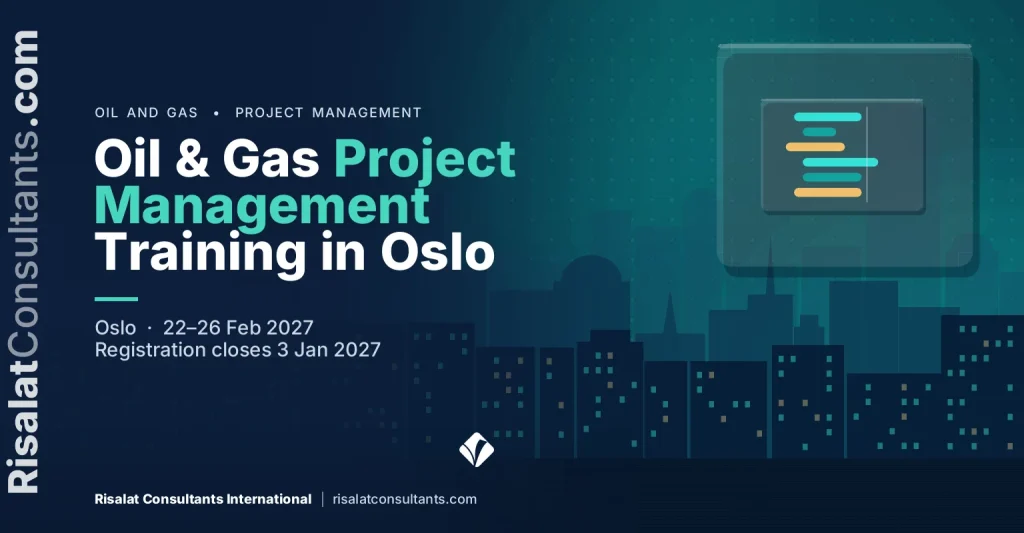
- 22–26 Feb 2027 (5 days)
- Where
- Scandic Solli, Oslo, Norway
- Fee per participant
- £3,810 (GBP)
- Payment
- By invoice and bank transfer
- Registration closes
- 3 Jan 2027
- Format
- 5-day short course: a practical capacity-building programme for government, NGO and project teams in Oslo
- In-house option
- Run it for your team, on your dates
On this page 11 sections
Oil & Gas Project Management Training in Oslo
Programme Overview
Contemporary projects in the oil and gas industry face daunting challenges as they have to be implemented in an increasingly competitive, complex and technologically advanced environment. Although financially attractive, many oil and gas projects have proved to be too risky to be executed, possessing unique characteristics that must be handled with due diligence. A shortage of technical talent in the sector is set to become more acute in the near future as a generation of experienced engineers retires. In the face of ever-changing technologies and environmental regulations, having well-educated and trained staff members is imperative, requiring professionals to master appropriate management techniques to tackle the challenges that lie ahead.
Free self-check: the procurement maturity assessment gives 30 questions on planning, tendering, contract management, integrity and e-procurement, with a score per area, in about 10 minutes.
The Oil & Gas Project Management Workshop in Oslo, Norway, is an extensive short-term course introducing participants to recent innovations and advancements in oil and gas project management, along with practical tools and techniques for evaluating project processes. The programme covers the entire oil and gas project lifecycle, putting particular emphasis on assessing and mitigating project risks and determining possible outcomes. Delivered by Risalat Consultants International in Oslo, Norway, it combines expert-led sessions, real cases and group work, allowing participants to apply what they learn directly within their own institutions.
The course is designed for programme and project managers, project control staff, project support managers and others seeking practical, current skills in project and programme management.
The programme strengthens institutional capability in:
- Oil and gas projects, programmes, portfolio and their management
- Regulatory framework, institutional factors and infrastructure
- Project sanctioning and approval process for the oil and gas industry
- Contemporary challenges for oil and gas projects
- The concept of project management and the Project Management Body of Knowledge (PMI)
- Project life cycles and stage gates
- Critical tools, techniques and processes for oil and gas project management
- Oil and gas project scope management
- Project initiation and planning
- Scope, schedule and work plans
- Budgeting and cost control
- Risk and issue management
Why this matters now
Organisations increasingly require professionals capable of:
- Plan projects with clear scope, schedule and budget
- Manage risks and issues before they become delays
- Coordinate procurement, finance and technical work
- Report progress clearly to financiers and management
- Lead teams and manage stakeholders
Strong project and programme management systems help organisations:
- Deliver projects on time and on budget
- Reduce delays and cost overruns
- Meet financier requirements
- Achieve the agreed results
Who Should Attend
This programme is designed for:
- Programme and project managers
- Project control staff
- Project support managers
- Senior decision makers
- Project engineers
- Commercial management personnel
- Any professional involved in gas and oil project management
- Project and programme managers
- PIU coordinators and staff
- Planning and monitoring officers
- Technical team leaders
- Procurement and finance staff in projects
Tick what your team needs to be able to do.
Programme Objectives
By the end of this programme participants will be able to:
- Demonstrate the comprehensive understanding of oil and gas project management cycle and stage gates
- Assess the challenges and issues in oil and gas project management processes
- Apply advanced project control and monitoring methods
- Suggest practical insights for risk and issues management, quality management, and cost and time management of oil and gas projects
- Explain the project cycle and the role of each stakeholder
- Prepare a project plan with scope, schedule and budget
- Build a work plan and Gantt chart
- Identify and manage risks and issues
- Coordinate procurement, finance and technical work
- Lead project teams and manage stakeholders
Training Structure & Contents
- Oil and gas projects, programmes, portfolio and their management
- Project life cycles and stage gates
- Project quality management and assurance
- Advanced planning, monitoring and controlling methods for oil and gas projects
- Cash flow management
- Criteria for an effective and winning project charter
- The project cycle, governance, and roles of the PIU, ministry and financier
- Regulatory framework, institutional factors and infrastructure
- Critical tools, techniques, and processes for oil and gas project management
- Oil and gas project planning principles
- Human resource management
- Oil and gas project sensitivity analysis
- Identifying gaps and oversights in oil and gas projects charter
- Scope, work breakdown, scheduling and Gantt charts
- Project sanctioning and approval process for oil and gas industry
- Oil and gas project scope management
- Cost management
- Commercial viability and readiness level of oil and gas projects
- Project selection criteria and KPIs
- Measuring the viability, deliverability and readiness level of the project charter
- Risk and issue management, procurement and contract coordination
- Contemporary challenges for oil and gas projects
- Stakeholder and communications management
- Time management and advanced scheduling methods
- Capital budgeting tools and techniques
- Procurement management tools and techniques for EPC and EPIC
- Rectifying changes and identifying omissions in the project charter
- Team leadership, roles, stakeholder mapping and communication
- The concept of project management and the Project Management Body of Knowledge (PMI)
- Risk and issues management in oil and gas projects
- Critical path management and earned value management
- Capital expenditures and operating expenditures management
- Project charter structure, format and key elements
- Progress monitoring, indicators and reporting to financiers
- Supervision missions and reviews
Full day-by-day contents
First Day | Project foundations
- Oil and gas projects, programmes, portfolio and their management
- Project life cycles and stage gates
- Project quality management and assurance
- Advanced planning, monitoring and controlling methods for oil and gas projects
- Cash flow management
- Criteria for an effective and winning project charter
- The project cycle, governance, and roles of the PIU, ministry and financier
Second Day | Planning
- Regulatory framework, institutional factors and infrastructure
- Critical tools, techniques, and processes for oil and gas project management
- Oil and gas project planning principles
- Human resource management
- Oil and gas project sensitivity analysis
- Identifying gaps and oversights in oil and gas projects charter
- Scope, work breakdown, scheduling and Gantt charts
Third Day | Risk and coordination
- Project sanctioning and approval process for oil and gas industry
- Oil and gas project scope management
- Cost management
- Commercial viability and readiness level of oil and gas projects
- Project selection criteria and KPIs
- Measuring the viability, deliverability and readiness level of the project charter
- Risk and issue management, procurement and contract coordination
Fourth Day | People and stakeholders
- Contemporary challenges for oil and gas projects
- Stakeholder and communications management
- Time management and advanced scheduling methods
- Capital budgeting tools and techniques
- Procurement management tools and techniques for EPC and EPIC
- Rectifying changes and identifying omissions in the project charter
- Team leadership, roles, stakeholder mapping and communication
Fifth Day | Monitoring, reporting and action planning
- The concept of project management and the Project Management Body of Knowledge (PMI)
- Risk and issues management in oil and gas projects
- Critical path management and earned value management
- Capital expenditures and operating expenditures management
- Project charter structure, format and key elements
- Progress monitoring, indicators and reporting to financiers
- Supervision missions and reviews
Training Methodology
In order to maximise the comprehension and retention of the knowledge acquired, contemporary adult learning techniques are applied. Along with formal presentations, delegates are involved in open discussions and group assignments, with active participation encouraged throughout the interactive workshop. A topic-relevant field visit is arranged to demonstrate the theoretical base discussed in the sessions. Before the programme, a short pre-assessment helps facilitators understand each participant’s role and priorities to adjust examples, and each day concludes with a reflection on practical work application.
- Expert-led sessions on current practice
- Regional and international case studies
- Group work and practical exercises
- Simulations and role plays where relevant
- Discussion of participants’ own challenges
- Peer learning across institutions and countries
- Practical tools and templates to take back to work
- Daily reflection and action planning
Expected Outcomes
- Plan projects with clear scope, schedule and budget
- Manage risks and issues early
- Coordinate procurement, finance and technical work
- Lead teams and manage stakeholders
- Report progress clearly
- Close projects and capture lessons
£3,810 per participant · invoice and bank transfer · groups of 5 or more receive a discount
Five or more from one organisation: ask for the group rate on the invoice request.
Ten or more: an in-house version for your institution may cost less per person. Ask for an in-house quote.
Registration closes in 36 days (3 Jan 2027)
Regional Relevance & Application
Europe: European institutions apply project and programme management within detailed regulatory frameworks and reform agendas. Participants from Europe can compare their practice with colleagues from other regions and test how established methods work under different conditions.
Africa: Across Africa, ministries, agencies and project teams working in project and programme management increasingly operate alongside donor-financed programmes that expect clear systems and evidence. The programme helps participants adapt good practice to the institutions and resources they work with.
Middle East: In the Middle East, national development strategies and diversification plans place growing demands on project and programme management. Participants explore how to build the capability these plans need inside public bodies and companies.
Asia: Institutions across Asia combine rapid growth with ambitious modernisation programmes. Participants from Asia can share their experience of scaling systems quickly.
Who Will Deliver This Programme
Each date is delivered by a team assigned from Risalat's expert network for this subject. For this programme we assign:
How we choose them: Experience in the region of the participants or comparable settings; Command of the financier rules that apply (World Bank, ADB, AfDB, EU, UN) where relevant; Delivery in English; other languages on request for in-house groups; No conflict of interest with participants' institutions.
Training courses in OsloOil and Gas training courses
Why Oslo for this programme
Oslo hosts key national institutions, including the Storting, government ministries, and the Nobel Peace Centre. Visiting officials can examine Norwegian public administration models, renewable energy initiatives, and urban transport systems. The city is accessible via direct international flights and efficient airport rail links.
The Oil & Gas Project Management Training in Oslo programme in February 2027 brings together officials and professionals from across Europe, Africa, the Middle East and Asia. Sessions combine short inputs, case studies and group work on participants' own files, and the city's institutions can be added as a study visit on request.
Getting there: Oslo Airport, Gardermoen (OSL).
Check whether you need a visa with the free Visa Checker, and ask for an invitation letter once you are registered.
The same topic in other cities
- Extractive Industries Governance and EITI Implementation in Singapore (Singapore)
- Island Waste Segregation and Circular Material Recovery Models in Mauritius (Mauritius)
- Small Island Landfill Rehabilitation and Leachate Containment in Dubai (Dubai)
- Bagasse Biomass Cogeneration and Carbon Offset Verification Systems in Cape Town (Cape Town)
- Distribution Grid Technical Loss Reduction and Substation Upgrade in Singapore (Singapore)
- Island Stormwater Drainage & Vacuum Sewerage Network Operations in Kuala Lumpur (Kuala Lumpur)
Other programmes in Oslo
Questions before you nominate your team? Book a 30-minute call with us, or ask for this programme in-house.
- World Bank Projects and Operations World Bank
- ADB Projects and Tenders Asian Development Bank
Is there project management training for government officials in Oslo in February 2027?
Can "Oil & Gas Project Management Training in Oslo" be delivered in-house for one organisation?
Which other project management programmes does Risalat run?
How do organisations register and pay?
For teams and institutions
Bring your team
Teams that learn together apply more at work. Tell us how many people and how you would like to take part: we reply with a group quote within two working days.
Watch: this programme in short


Other dates and cities for this subject: Project Management for Donor-Funded Projects training courses (27 upcoming dates).
More training courses in Norway · All programmes in Europe · Full training calendar
Plan this programme in a roadmap: why it matters, why to approve it, the dates to plan and the career it builds.