Programme Overview
The Gender Transformative Climate Change Adaptation Training equips government officials, development practitioners, and climate professionals with practical frameworks to integrate gender equality into climate adaptation planning, policy design, and project implementation.
For broader reflection on climate adaptation capacity as a development priority, see our perspective on Climate Adaptation Capacity – The New Development Currency.
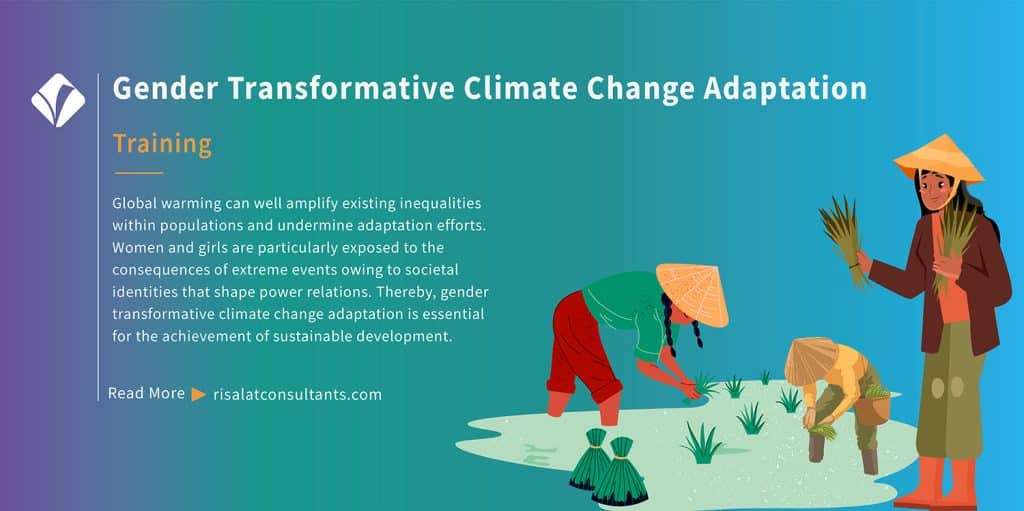
Climate change disproportionately impacts women and vulnerable populations, often reinforcing existing inequalities and weakening adaptation outcomes. While many countries have adopted climate strategies, gender considerations frequently remain superficial or disconnected from operational delivery.
This programme responds to these challenges by strengthening participants’ capacity to design and implement gender-responsive and gender-transformative climate adaptation initiatives, moving beyond awareness toward actionable institutional change.
Participants learn how to apply gender analysis to climate programmes, develop inclusive adaptation strategies, integrate Gender Action Plans, and strengthen policy alignment across national and local systems.
The training emphasizes applied learning, linking climate science with social inclusion, institutional reform, and project execution.
The Gender Transformative Climate Change Adaptation Training supports governments and development partners in operationalizing inclusive climate policies through practical planning, implementation, and monitoring tools.
Target Audience for Gender Transformative Climate Change Adaptation
This Gender Transformative Climate Change Adaptation programme supports professionals implementing inclusive climate policies, community resilience initiatives, and gender-responsive adaptation projects.
- Government climate and environment officers
- Gender focal points and social safeguards specialists
- Ministry planners and policy makers
- Climate adaptation and resilience programme managers
- NGO and INGO practitioners
- Development partner project staff
- WASH, agriculture, energy, and urban resilience teams
- Local government implementation units
Tick what your team needs to be able to do.
Programme Objectives
By the end of this Gender Transformative Climate Change Adaptation Training, participants will be able to:
- Understand the linkages between gender inequality and climate vulnerability
- Apply gender analysis tools within climate adaptation frameworks
- Design gender-responsive adaptation strategies and interventions
- Develop Gender Action Plans for climate projects
- Assess gender responsiveness of policies and programmes
- Integrate gender into National Adaptation Plans and sector strategies
- Apply inclusive monitoring indicators
- Strengthen institutional coordination for gender and climate integration
- Translate global frameworks into practical local implementation
- Develop organizational action plans for gender-transformative adaptation
Programme Contents – Gender Transformative Climate Change Adaptation
- Climate risks and differentiated impacts
- Gender norms, power relations, and adaptive capacity
- Climate justice and inclusive resilience
- Gender-transformative vs gender-sensitive approaches
- Gender analysis tools for climate programmes
- Gender-responsive adaptation design
- Participatory planning approaches
- Developing Gender Action Plans
- Mainstreaming gender into NAPs and sector strategies
- Assessing gender responsiveness of climate projects
- Governance frameworks for inclusive adaptation
- Institutional coordination mechanisms
- Livelihood resilience and women’s economic empowerment
- Food security and nutrition
- Social protection and infrastructure
- Financial inclusion and leadership pathways
- Ecosystem-based adaptation
- Country case discussions
- Expert panels
- Group work on participant projects
- Organizational action plans
- Peer review and implementation roadmaps
Full day-by-day contents
First Day – Climate Change, Vulnerability & Gender Dynamics
- Climate risks and differentiated impacts
- Gender norms, power relations, and adaptive capacity
- Climate justice and inclusive resilience
- Gender-transformative vs gender-sensitive approaches
Second Day – Gender-Responsive Climate Adaptation Planning
- Gender analysis tools for climate programmes
- Gender-responsive adaptation design
- Participatory planning approaches
- Developing Gender Action Plans
Third Day – Policy Alignment & Institutional Integration
- Mainstreaming gender into NAPs and sector strategies
- Assessing gender responsiveness of climate projects
- Governance frameworks for inclusive adaptation
- Institutional coordination mechanisms
Fourth Day – Inclusive Climate Adaptation Case Studies
- Livelihood resilience and women’s economic empowerment
- Food security and nutrition
- Social protection and infrastructure
- Financial inclusion and leadership pathways
- Ecosystem-based adaptation
Fifth Day – Knowledge Exchange & Action Planning
- Country case discussions
- Expert panels
- Group work on participant projects
- Organizational action plans
- Peer review and implementation roadmaps
Programme Methodology
The Gender Transformative Climate Change framework is applied throughout practical exercises, case studies, and action planning sessions.
The programme uses an applied, practitioner-focused approach combining:
- Facilitator-led technical sessions
- Real-world climate adaptation case studies
- Group exercises and simulations
- Gender analysis clinics
- Action planning workshops
- Peer learning and expert feedback
Host Country Profile
Vietnam offers a practical learning environment for climate adaptation and gender integration, with extensive experience in resilience programming across coastal, rural, and urban contexts. Hosting the programme in Hanoi provides exposure to active policy reform, climate vulnerability management, and inclusive development practices, supporting applied learning and regional knowledge exchange.
Expected Outcomes of Gender Transformative Climate Change Adaptation
Through this Gender Transformative Climate Change Adaptation Training, participants strengthen their ability to design inclusive climate strategies, implement gender-responsive adaptation measures, and translate policy commitments into measurable resilience outcomes.
- Strengthen gender integration in climate policies and programmes
- Improve design quality of adaptation initiatives
- Build institutional capacity for inclusive climate resilience
- Apply gender-transformative approaches in real projects
- Enhance coordination between climate and gender teams
- Produce actionable implementation plans
£3,980 per participant · invoice and bank transfer · groups of 5 or more receive a discount
Five or more from one organisation: ask for the group rate on the invoice request.
Ten or more: an in-house version for your institution may cost less per person. Ask for an in-house quote.
Registration closes in 5 days (23 Oct 2026)
Course Deliverables
Before the Programme
- Pre-training needs assessment
- Programme briefing and preparatory materials
- Gender & climate readiness self-assessment checklist
- Logistics and participation guidance
During the Programme
- Welcome networking session with facilitators and peers
- Accommodation with daily breakfast
- Comprehensive Gender Transformative Climate Change Adaptation training manual and reference materials
- Gender analysis, adaptation planning, and Gender Action Plan templates
- Practical group exercises and applied climate adaptation simulations
- Case studies from climate resilience and inclusive development projects
- Training stationery and branded programme materials
- Full access to training facilities and learning resources
- Guided peer discussions and expert feedback sessions
- Draft Gender Action Plans and organizational roadmaps developed during workshops
- Mini Pad / Tablet for accessing digital training materials (participants keep it)
- Daily lunch and refreshments
- Certificate of Completion
- Programme Participation Recognition Award
After the Programme
- Post-training reference materials
- Updated gender-responsive adaptation planning templates
- Guidance on applying Gender Transformative Climate Change Adaptation approaches within institutions
- Practical recommendations for integrating gender into climate policies, programmes, and implementation
Participants interested in institutionalizing gender equality into climate finance may also benefit from our Gender-Responsive Budgeting Training.