Key facts
- Dates
- 15–19 Feb 2027 (5 days)
- Where
- Unima Grand Hotel, Male, Maldives
- Fee per participant
- £3,600 (GBP)
- Payment
- By invoice and bank transfer
- Registration closes
- 6 Jan 2027
- Certificate
- Certificate of completion
- In-house option
- Run it for your team, on your dates
On this page 15 sections
Programme Overview
Leadership in ministries, public agencies and project teams is increasingly judged on how well managers handle people: how they hold difficult conversations, keep teams steady under pressure, give feedback that changes performance and build trust across departments. These are the everyday situations in which emotional intelligence, the ability to perceive, understand and regulate emotions in oneself and others, shows up as a practical management skill.
The evidence base is now strong enough to treat emotional intelligence as a learnable competence rather than a fixed trait. A meta-analysis by Mattingly and Kraiger (2019), drawing on 58 training studies, found a moderate positive effect of formal training on emotional intelligence, and exploratory results suggested that training works better when it relies on practice and feedback rather than lectures. This programme is built on that finding: most of the time is spent on rehearsal, structured feedback and real cases from participants’ own workplaces.
Research also shows where the skill matters most. Joseph and Newman’s integrative meta-analysis (2010) describes a cascade in which emotion perception supports emotion understanding, which supports deliberate emotion regulation, which in turn relates to job performance, with the clearest link in roles that carry high emotional demands. Public-facing services, hospitality, health, frontline regulation and project teams working with communities all fit this description.
The programme is held in Male, the capital of the Maldives, where the government is investing in senior leadership development through an Executive Development Programme for 2025–2027 delivered with the Civil Service Training Institute and the Foreign Service Institute of Maldives, with service excellence as a stated theme. This makes Male a relevant setting for leaders who want to connect personal skills with institutional service culture.
Over five days, participants move from self-awareness to team leadership, conflict, wellbeing and influence, and finish with a personal leadership development plan they can apply in their own organisation.
The Programme Strengthens Institutional Capability
- Evidence-based understanding of emotional intelligence models and measures
- Leadership self-awareness and reflective practice
- Emotion regulation under pressure and in public scrutiny
- Empathy and perspective-taking in service delivery
- Constructive feedback and performance conversations
- Managing underperformance with fairness and clarity
- Conflict prevention and resolution within and between teams
- Psychological safety and open reporting of problems
- Manager support for staff wellbeing and stress prevention
- Trust-building with stakeholders, communities and partners
- Influence and persuasion grounded in integrity
- Delegation and coaching conversations
- Leading change and uncertainty
- Inclusive leadership across diverse teams
- Values-driven public service leadership
- Personal leadership development planning and follow-up
The emphasis throughout is practical: each concept is translated into behaviours a manager can practise, observe in others and build into routine team processes.
The Growing Importance of Emotional Intelligence in Leadership
Public sector reform has moved people leadership closer to the centre of performance. The OECD Recommendation on Public Service Leadership and Capability, adopted in January 2019, organises its 14 principles under three pillars, the first of which is a values-driven culture and leadership. It asks governments to build leadership capability and to foster inclusive and safe workplaces, which places the interpersonal skills of managers firmly on the reform agenda.
Workplace wellbeing is the second driver. In 2022 the World Health Organization and the International Labour Organization estimated that about 12 billion working days are lost each year to depression and anxiety, at a cost of nearly US$1 trillion to the global economy. The WHO guidelines on mental health at work recommended manager training for the first time, so that managers can recognise and respond to staff in distress and prevent stressful working conditions.
The third driver is retention and commitment. Meta-analytic work summarised in a 2024 editorial in Frontiers in Psychology links emotional intelligence with job satisfaction and organisational commitment, and inversely with intentions to leave. For agencies and project units that struggle to retain skilled staff, the quality of day-to-day management is one of the few levers fully under their own control.
Organisations increasingly require professionals capable of:
- Reading the emotional climate of a team and acting early
- Staying composed in high-stakes meetings and public settings
- Separating facts, interpretations and emotions in difficult situations
- Giving specific, timely and respectful feedback
- Holding accountability conversations without damaging relationships
- Resolving conflict between colleagues, units or partners
- Recognising signs of stress and directing staff to support
- Building trust with citizens, clients and communities
- Influencing without formal authority across agencies
- Coaching staff to solve problems themselves
- Leading teams through restructuring or reform
- Modelling integrity and consistency under pressure
- Making decisions that balance empathy with fairness
Strong emotional intelligence systems help organisations:
- Reduce avoidable conflict and grievances
- Improve the quality of service interactions
- Retain capable staff and reduce turnover costs
- Raise the honesty of upward reporting on risks and problems
- Strengthen cooperation between departments
- Support staff wellbeing and reduce absence
- Make performance management fairer and more consistent
- Build leadership pipelines with clear behavioural standards
- Sustain morale during change
Emotional intelligence is not a substitute for technical skill, clear rules or sound systems. The research is clear that its effect on performance depends on the role and on how it is measured. The programme therefore treats it as one part of effective leadership and links every skill to concrete management tasks.
Who Should Attend This Emotional Intelligence for Leaders Training?
This programme is designed for:
- Permanent secretaries, directors general and senior executives
- Directors and heads of department in ministries and agencies
- Project directors and managers of project implementation units
- Team leaders and supervisors in public services
- Human resource and organisational development managers
- Learning and development officers and internal trainers
- Managers in state-owned enterprises
- Hospitality, tourism and guest-services managers
- Health service and hospital managers
- Customer service and frontline service managers
- Community engagement and stakeholder relations officers
- Programme managers in NGOs and development partners
- Newly promoted managers moving into people leadership
- Technical specialists who lead multi-disciplinary teams
- Executive assistants and chiefs of staff supporting senior leaders
Participants benefit most when they bring one or two real leadership situations from their own work. Mixed groups from public, private and development organisations are encouraged, since many challenges are shared across sectors.
Tick what your team needs to be able to do.
Emotional Intelligence for Leaders Training Objectives
Upon successful completion of this Emotional Intelligence for Leaders Training, participants will be able to:
- Explain the main models of emotional intelligence and what the research does and does not show
- Assess their own emotional patterns, triggers and leadership habits
- Apply practical techniques to regulate emotions under pressure
- Read verbal and non-verbal signals accurately in meetings and service settings
- Use empathy to understand stakeholder positions without losing objectivity
- Give and receive feedback using a structured, behaviour-based approach
- Conduct accountability conversations about underperformance
- Diagnose and de-escalate conflict within and between teams
- Recognise signs of stress and respond in line with good manager practice
- Build psychological safety so staff raise problems early
- Influence decisions ethically across organisational boundaries
- Prepare a personal leadership development plan with measurable actions
Each objective is linked to a session, a practice exercise and a tool in the participant manual, so progress can be checked during and after the programme.
1. According to the Mattingly and Kraiger (2019) meta-analysis, what effect does formal training have on emotional intelligence?
The meta-analysis of 58 studies reported a moderate positive training effect regardless of study design.
2. In which kind of roles does ability-based emotional intelligence relate most clearly to job performance?
Joseph and Newman (2010) found the link was positive for high emotional labour jobs and not for low emotional labour jobs.
3. What did the 2022 WHO guidelines on mental health at work recommend for the first time?
WHO recommended manager training to help prevent stressful work environments and respond to workers in distress.
Programme Contents and Structure
- What emotional intelligence is: ability, trait and mixed models
- What meta-analyses show about emotional intelligence and performance
- Limits, myths and common misreadings of the evidence
- The cascade from perception to understanding to regulation
- Self-assessment: emotional patterns, triggers and habits
- Values, purpose and leadership identity
- Perception, attitudes and behaviour at work
- How stress responses affect judgement and decisions
- Common stress response patterns in leaders
- Cognitive reappraisal and other evidence-based regulation strategies
- Controlling emotional impulses in meetings and correspondence
- Recovering after setbacks and criticism
- Work-life boundaries and sustainable workload
- Manager actions recommended in WHO guidance on mental health at work
- Accurate listening and checking understanding
- Reading non-verbal signals with caution
- Empathy versus agreement: staying objective
- Communicating across cultures and hierarchies
- Structured, behaviour-based feedback models
- Receiving feedback without defensiveness
- Accountability conversations about underperformance
- How emotions spread within teams
- Psychological safety and early reporting of problems
- Sources of conflict: tasks, processes and relationships
- Conflict styles and when to use each
- Mediation steps for managers
- Trust-building across departments and partner agencies
- Inclusive leadership and diverse teams
- Sources of influence in organisations
- Ethical persuasion and the line with manipulation
- Stakeholder mapping and engagement planning
- Building emotional connection with audiences
- Presenting difficult messages clearly
- Leadership integrity and consistency
- Embedding emotional intelligence in HR processes
Full day-by-day contents
The five days build from self-awareness to leading others, with practice in every session.
- Day 1: foundations and self-awareness
- Day 2: emotion regulation and resilience
- Day 3: empathy, communication and feedback
- Day 4: teams, conflict and psychological safety
- Day 5: influence, integrity and personal leadership plan
Full day-by-day contents
First Day | Foundations and Leadership Self-Awareness
- What emotional intelligence is: ability, trait and mixed models
- What meta-analyses show about emotional intelligence and performance
- Limits, myths and common misreadings of the evidence
- The cascade from perception to understanding to regulation
- Self-assessment: emotional patterns, triggers and habits
- Values, purpose and leadership identity
- Perception, attitudes and behaviour at work
- Reflective practice routines for busy managers
- Setting personal learning goals for the week
Workshop: Leadership Mirror
Participants complete a structured self-assessment and collect short peer observations during the day. In trios, they compare their self-view with what others notice, identify two recurring triggers in their work and agree one behaviour to practise for the rest of the programme. The outputs open each participant’s personal development plan.
Second Day | Emotion Regulation and Personal Resilience
- How stress responses affect judgement and decisions
- Common stress response patterns in leaders
- Cognitive reappraisal and other evidence-based regulation strategies
- Controlling emotional impulses in meetings and correspondence
- Recovering after setbacks and criticism
- Work-life boundaries and sustainable workload
- Manager actions recommended in WHO guidance on mental health at work
- Responding to a colleague in distress and referring to support
- Personal resilience plan
Workshop: Pressure Test Simulation
Participants rotate through three short, realistic scenarios: a hostile question in a public meeting, an urgent ministerial request that conflicts with procedure, and an upset staff member. Observers record specific behaviours, and each participant tries a regulation technique and receives feedback. The group then identifies which techniques worked best in each setting.
Third Day | Empathy, Communication and Feedback Conversations
- Accurate listening and checking understanding
- Reading non-verbal signals with caution
- Empathy versus agreement: staying objective
- Communicating across cultures and hierarchies
- Structured, behaviour-based feedback models
- Receiving feedback without defensiveness
- Accountability conversations about underperformance
- Delegation and coaching conversations
- Written communication and tone in email and messages
- Practice clinic with real participant cases
Workshop: Feedback Practice Clinic
Using situations brought by participants, pairs prepare and conduct a feedback or performance conversation while a third person observes with a checklist. Roles rotate so that every participant gives, receives and observes. The clinic ends with a short review of which phrases opened dialogue and which closed it, and each participant drafts a conversation plan for a real case at work.
Fourth Day | Teams, Conflict and Psychological Safety
- How emotions spread within teams
- Psychological safety and early reporting of problems
- Sources of conflict: tasks, processes and relationships
- Conflict styles and when to use each
- Mediation steps for managers
- Trust-building across departments and partner agencies
- Inclusive leadership and diverse teams
- Leading teams through restructuring and reform
- Team agreements and meeting practices
Case Study: Inter-Agency Coordination Under Pressure
Teams analyse a composite case based on common public sector situations: two agencies sharing responsibility for a delayed service improvement, with tension between their staff and pressure from senior leadership. Groups map the interests and emotions involved, design a facilitated meeting, and role-play its opening. The debrief links the case to coordination goals found in current executive development programmes.
Fifth Day | Influence, Integrity and Personal Leadership Plan
- Sources of influence in organisations
- Ethical persuasion and the line with manipulation
- Stakeholder mapping and engagement planning
- Building emotional connection with audiences
- Presenting difficult messages clearly
- Leadership integrity and consistency
- Embedding emotional intelligence in HR processes
- Measuring progress: behaviours, feedback and follow-up
- Personal leadership development plan presentation
Capstone Exercise: My 90-Day Leadership Plan
Each participant finalises a 90-day plan with three target behaviours, the situations where they will practise them, the colleagues who will give feedback and simple indicators of progress. Participants present their plans in small groups, receive peer and facilitator comments, and agree a follow-up check-in. The plan becomes the basis for post-training support.
Emotional Intelligence for Leaders Training Methodology
The design follows the evidence that emotional intelligence training is more effective when participants practise skills and receive feedback, rather than listening to long lectures. Input sessions are kept short, and most time is spent applying ideas to real situations.
The programme combines:
- Short evidence-based input sessions
- Validated self-assessment and reflection tools
- Structured peer observation with behaviour checklists
- Role plays based on participants’ own cases
- Scenario simulations under time pressure
- Feedback clinics in trios
- Group case analysis
- Facilitated discussion of research findings
- Daily reflection journals
- Action learning sets
- Personal development planning
- Peer coaching pairs that continue after the programme
Facilitators are experienced in leadership development for public institutions and development projects. Confidentiality is agreed at the start, so participants can discuss real situations openly.
Expected Outcomes
Upon completion of this Emotional Intelligence for Leaders Training, participants will be able to:
- Describe their own leadership patterns and triggers with greater accuracy
- Stay composed and decisive in pressured situations
- Conduct feedback and performance conversations with confidence
- De-escalate and resolve conflict before it escalates
- Support staff wellbeing within the manager’s role
- Build team practices that encourage early reporting of problems
- Influence colleagues and partners ethically
- Apply a clear 90-day plan for continued development
- Use practical tools to coach their own teams
Participants leave with a tested set of conversation plans, tools and a peer network that supports continued practice.
£3,600 per participant · invoice and bank transfer · groups of 5 or more receive a discount
Five or more from one organisation: ask for the group rate on the invoice request.
Ten or more: an in-house version for your institution may cost less per person. Ask for an in-house quote.
Registration closes in 60 days (6 Jan 2027)
Institutional Application of Emotional Intelligence for Leaders Training
This programme supports organisations in strengthening:
- Leadership competency frameworks with observable behaviours
- Performance management and appraisal conversations
- Manager induction and promotion preparation
- Staff wellbeing and stress prevention measures
- Grievance prevention and early conflict resolution
- Inter-departmental coordination
- Service quality and complaint handling
- Internal coaching and mentoring
- Change management communication
- Retention of skilled staff
- Values and integrity culture
Participants return with practical tools to improve:
- Feedback conversation planning
- Conflict mapping and mediation
- Team agreements and meeting norms
- Stress recognition and referral
- Stakeholder engagement planning
- Delegation and coaching routines
- Personal reflection and learning logs
- Behaviour-based progress tracking
Organisations can start with a short training needs assessment to see which leadership skills need most attention, and use the institutional capacity assessment to connect individual development with wider organisational goals.
Regional Relevance & Application
Asia
Across South Asia, governments are investing in senior civil service development, including cooperation between India’s National Centre for Good Governance and the Maldives Civil Service Commission on training for senior officials. Managers in these systems often lead large, hierarchical teams where respectful feedback and conflict handling are essential.
Middle East
Government modernisation agendas in the Gulf emphasise customer-focused services and leadership development. Emotional intelligence skills support the shift from rule-based administration towards service-oriented public management.
Africa
Ministries and project implementation units often work with multiple financiers, communities and contractors at once. Managing stakeholder tension and keeping teams motivated through long implementation periods are recurring leadership needs.
Europe
Public employers in OECD countries are applying the 2019 Recommendation on Public Service Leadership and Capability, with attention to inclusive, safe workplaces and leadership capability. Participants from Europe can compare these approaches with practice elsewhere.
Pacific
Small island administrations operate with small teams in which each manager carries many roles. Relationships matter greatly, and the ability to handle conflict without lasting damage is critical for service continuity.
Across all regions, the same evidence applies: leadership skills improve through practice and feedback, and they matter most in roles with high emotional demands.
Host Country Profile – Maldives
Male is the capital and main administrative centre of the Maldives, a nation of low-lying coral islands in the Indian Ocean. Government ministries, the Civil Service Commission, state-owned enterprises and the country’s main business community are concentrated in and around the city, which is linked by bridge to Hulhule, home of Velana International Airport, and to Hulhumale.
The Maldives offers a useful benchmark for service-oriented leadership. Tourism is the core of the economy: by 10 December 2025 the country had recorded more than 2.08 million tourist arrivals for the year, already above the 2024 record of about 2.05 million, with China, Russia and the United Kingdom as leading markets. A service economy of this kind depends on frontline staff and managers who handle demanding guests and colleagues calmly every day. In the public sector, the Executive Development Programme 2025–2027, launched by the President’s Office with the Civil Service Training Institute and the Foreign Service Institute of Maldives, focuses on managerial skills, inter-agency coordination and a service excellence culture.
Velana International Airport opened its new passenger terminal on 26 July 2025, designed to handle 7.5 million passengers per year. Official Maldivian mission guidance states that tourists of all nationalities receive a free 30-day visa on arrival, subject to a valid machine-readable passport, an onward ticket, proof of funds or a confirmed hotel booking, and an IMUGA traveller declaration submitted within 96 hours before travel. Participants should confirm current requirements before booking; Risalat provides visa advice to registered participants.
Emotional Intelligence for Leaders Training Deliverables
Every participant receives a full set of learning materials and support before, during and after the programme.
Before the Programme
- Participant Pre-Assessment
- Emotional Intelligence Readiness Assessment
- Emotional Intelligence Resource Pack
- Preparatory Reading Materials
- Complimentary Visa Support & Advisory
During the Programme
- Airport Pickup & Welcome Assistance
- Accommodation with Breakfast
- Welcome Networking Dinner
- Risalat Training Kit (Bag, Bottle, Mug, T-Shirt, Cap, Passport Cover, Pens, Notebook, Magnet & Keychain)
- Comprehensive Emotional Intelligence Training Manual
- Leadership Self-Assessment Workbook
- Feedback Conversation Planner
- Conflict Mapping Template
- Stress Recognition and Referral Checklist
- Team Agreement Template
- Stakeholder Influence Map
- Practical Workshops & Simulations
- Group Discussions & Peer Learning
- Daily Lunch and Refreshments
- Full Access to Training Venue Facilities
- Mini Pad / Tablet with Digital Learning Materials
- Field Visit (where applicable)
- Entertaining City Tour
After the Programme
- Certificate of Completion
- Risalat Programme Participation Recognition Award
- Post-Training Reference Materials
- 90-Day Leadership Development Plan
- Peer Coaching Guide
- Follow-Up Self-Assessment
- Post-Training Support & Follow-Up Guidance
- Programme Report
Institutions that wish to train a leadership team together can request a tailored in-house version adapted to their own cases, competency framework and schedule through our request a proposal form.
Common Challenges in Emotional Intelligence for Leaders, And How This Training Helps
How can we know whether emotional intelligence training actually works?
Day 1 reviews what meta-analyses show, including the moderate positive training effect reported across 58 studies, and the limits of the evidence. Day 5 adds simple behaviour-based indicators so participants can track their own change.
How do managers stay calm when under public or political pressure?
Day 2 teaches evidence-based regulation techniques and tests them in the Pressure Test Simulation, with observer feedback on what worked.
How can supervisors address underperformance without damaging relationships?
Day 3 covers accountability conversations, and the Feedback Practice Clinic lets each participant rehearse a real case before using it at work.
How do we stop conflict between units from slowing down delivery?
Day 4 covers sources of conflict, mediation steps and the Inter-Agency Coordination case, giving managers a meeting design they can reuse.
How can managers support staff wellbeing without acting as counsellors?
Day 2 sets out the manager role described in WHO guidance: recognising distress, responding respectfully and referring staff to appropriate support.
How do we encourage staff to report problems early?
Day 4 explains psychological safety and helps teams agree practical meeting and reporting norms.
How can leaders influence partners they do not control?
Day 5 covers stakeholder mapping and ethical persuasion, applied to participants’ current coordination challenges.
How can learning be sustained after the programme ends?
The 90-Day Leadership Plan, peer coaching pairs and follow-up self-assessment keep practice going once participants return to work.
Frequently Asked Questions
Can emotional intelligence really be trained?
Yes. A meta-analysis of 58 studies by Mattingly and Kraiger (2019) found a moderate positive effect of training, and suggested that practice and feedback work better than lectures. The programme is designed around that finding.
Is this programme only for senior executives?
No. It suits senior leaders, middle managers, project managers and newly promoted supervisors in public, private and development organisations.
Do participants take a psychometric test?
Participants complete self-assessment and peer observation exercises for reflection. These are used for development only and results stay with the participant.
What do participants take away?
A 90-day leadership development plan, conversation planners, conflict and stakeholder tools, a training manual and a peer coaching guide.
Do I need a visa to attend in Male?
Official Maldivian guidance states that tourists of all nationalities receive a free 30-day visa on arrival, subject to passport, onward ticket, funds or booking and IMUGA declaration requirements. Please confirm current rules before travel.
Training courses in MaleEmotional and Cognitive Development training courses
Why Male for this programme
Male, Maldives, was chosen for this programme because it is easy to reach for the participants we expect and has suitable venues for practical, interactive training.
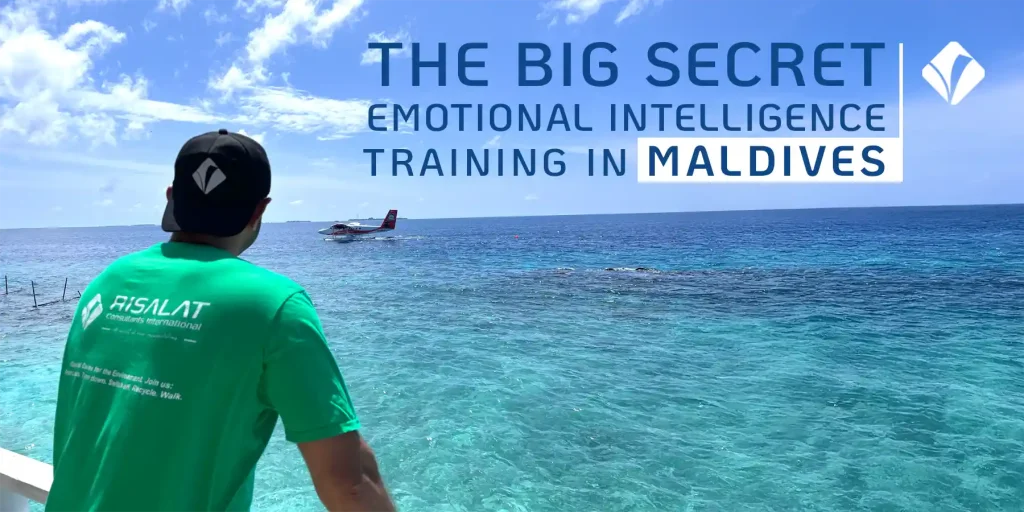
The Emotional Intelligence for Leaders Training in Male programme in February 2027 brings together officials and professionals. Sessions combine short inputs, case studies and group work on participants' own files, and the city's institutions can be added as a study visit on request.
Check whether you need a visa with the free Visa Checker, and ask for an invitation letter once you are registered.
The same topic in other cities
- Training on Cognitive Commerce – Using AI to Tap Into Consumer Minds in Tbilisi (Tbilisi)
- Training on Cognitive Commerce – Using AI to Tap Into Consumer Minds in Almaty (Almaty)
- Training on Cognitive Commerce – Using AI to Tap Into Consumer Minds (Seoul)
- Creative Thinking, Strategic Planning, Effective Communication and Leadership Workshop & Exposure (Reykjavik)
- PMP Certification Exam Preparation Training in Bali (Bali)
- Transformational Leadership and Change Management Training (Ho Chi Minh City)
Other programmes in Male
More training courses in Maldives · All programmes in Asia · Full training calendar