Programme Overview
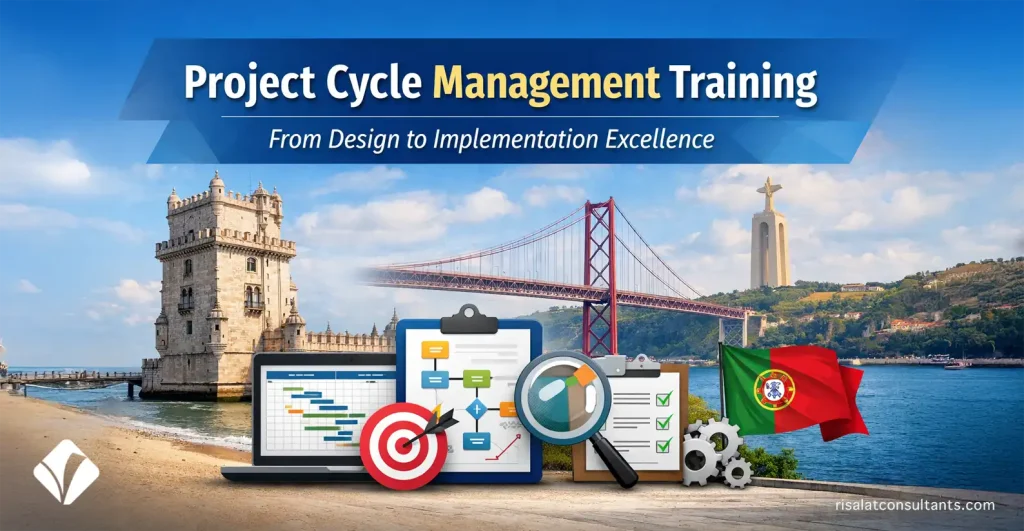
The Project Cycle Management Course equips government officials, development practitioners, and project teams with practical tools to design, implement, monitor, and close projects effectively across the full project lifecycle.
Across Asia, Africa, the Middle East, and Oceania, many donor-funded and public-sector projects face similar challenges: weak project design, unclear results frameworks, delayed implementation, fragmented reporting, and limited learning from past projects. These issues reduce development impact and strain institutional capacity.
This training responds directly to these realities by strengthening participants’ ability to manage projects from identification and formulation through implementation, monitoring, evaluation, and closure.
Rather than focusing on theory alone, the programme emphasizes applied Project Cycle Management (PCM) practices aligned with international development standards, helping participants translate plans into results, manage risks proactively, and improve accountability throughout the project lifecycle.
Participants gain hands-on experience in project design, logical frameworks, implementation planning, monitoring systems, reporting structures, and adaptive management.
See how effective Project Cycle Management transforms project design, implementation, and results across real-world development programmes.
Explore This Programme
Interactive overview
- Introduction to Project Cycle Management
- From development needs to project concepts
- Stakeholder analysis and problem trees
- Theory of change and results chains
- Logical Framework Approach (LFA)
- Common causes of weak project design
- Work planning and activity scheduling
- Budgeting and resource allocation
- Risk identification and mitigation planning
- Procurement and implementation sequencing
- Institutional roles and coordination mechanisms
- Designing monitoring frameworks and indicators
- Baselines, targets, and milestones
- Implementation progress reporting
- Managing deviations and performance bottlenecks
- Linking financial and physical progress
- Mid-term and completion evaluations
- Using evidence for course correction
- Knowledge management and documentation
- Institutionalizing feedback loops
- Building organizational learning culture
- Group work on real participant projects
- Building complete PCM frameworks
- Peer review and expert feedback
- Institutional action planning
- Roadmaps for strengthening project management systems
Tick what your team needs to be able to do.
Target Audience
This Project Cycle Management Course is designed for professionals involved in planning, implementing, and supervising development projects, including:
- Ministry project and planning officers
- PIU / PMU staff and project coordinators
- Monitoring & Evaluation professionals
- Finance and procurement teams supporting projects
- Sector specialists (infrastructure, health, education, climate, community development)
- Development partner liaison officers
- Local government implementation teams
- NGO and donor-funded programme managers
Project Cycle Management Course Objectives
By the end of this Project Cycle Management Training, participants will be able to:
- Apply Project Cycle Management principles across all project phases
- Design projects using logical frameworks and theories of change
- Develop realistic implementation plans and schedules
- Establish monitoring and reporting systems aligned with project objectives
- Identify risks early and apply corrective actions during execution
- Strengthen coordination between technical, financial, and M&E functions
- Prepare structured progress reports and completion documentation
- Use lessons learned to improve future project performance
Project Cycle Management Course Structure & Content
First Day – Project Identification & Design Foundations
- Introduction to Project Cycle Management
- From development needs to project concepts
- Stakeholder analysis and problem trees
- Theory of change and results chains
- Logical Framework Approach (LFA)
- Common causes of weak project design
Second Day – Planning & Implementation Readiness
- Work planning and activity scheduling
- Budgeting and resource allocation
- Risk identification and mitigation planning
- Procurement and implementation sequencing
- Institutional roles and coordination mechanisms
Third Day – Monitoring, Reporting & Performance Tracking
- Designing monitoring frameworks and indicators
- Baselines, targets, and milestones
- Implementation progress reporting
- Managing deviations and performance bottlenecks
- Linking financial and physical progress
Fourth Day – Evaluation, Learning & Adaptive Management
- Mid-term and completion evaluations
- Using evidence for course correction
- Knowledge management and documentation
- Institutionalizing feedback loops
- Building organizational learning culture
Fifth Day – Applied Project Cycle Lab
- Group work on real participant projects
- Building complete PCM frameworks
- Peer review and expert feedback
- Institutional action planning
- Roadmaps for strengthening project management systems
Training Methodology
This Project Cycle Management Course uses a highly applied approach combining:
- Interactive technical sessions
- Real development project case studies
- Group exercises and simulations
- Project design workshops
- Reporting clinics
- Peer learning and expert feedback
- Practical templates and implementation checklists
Expected Outcomes
Through this Project Cycle Management Course, participants strengthen end-to-end project delivery capability, from design and planning to implementation, monitoring, and closure.
- Strengthen project design and implementation capacity
- Improve monitoring and reporting quality
- Reduce execution delays and operational risks
- Enhance coordination across project teams
- Apply evidence-based decision making
- Produce actionable Project Cycle Management improvement plans
This project lifecycle management programme strengthens institutional capacity for design, implementation, monitoring, and results delivery. Participants leave equipped to support stronger delivery performance, transparency, and development impact.
For participants seeking deeper quality assurance tools within project lifecycles, explore our Advanced Project Cycle Quality Assurance Training.
The training draws on internationally recognized Project Cycle Management guidance, including the European Commission’s PCM operational framework that supports structured design, implementation, and evaluation of development projects.
Institutional Application
Participants will return to their organizations with practical Project Cycle Management tools and structured action plans that can be directly applied within ministries and project units, supporting stronger implementation oversight, reporting quality, and portfolio performance.
Host City – Lisbon
Lisbon offers a professional and neutral learning environment for international development practitioners, with strong connectivity to Europe, Africa, and the Middle East. Hosting the programme in Lisbon supports cross-regional knowledge exchange while providing a conducive setting for focused professional learning and institutional capacity building.
Lisbon provides a neutral learning environment for project lifecycle management and results-based delivery across international development portfolios.
This Project Cycle Management Course in Lisbon provides a neutral learning environment for strengthening project lifecycle delivery across international development portfolios.
Project Cycle Management Course Deliverables
Before the Programme
- Pre-training needs assessment
- Programme briefing materials
- PCM self-assessment checklist
- Logistics and participation guidance
During the Programme
- Welcome networking session with facilitators and peers
- Accommodation with daily breakfast
- Comprehensive Project Cycle Management course manual and reference materials
- Logical framework, implementation planning, and monitoring templates
- Practical group exercises and applied project simulations
- Case studies from development and public-sector projects
- Training stationery and branded programme materials
- Full access to training facilities and learning resources
- Guided peer discussions and expert feedback sessions
- Draft project tools and action plans developed during workshops
- Daily lunch and refreshments
- Certificate of Completion
- Programme Participation Recognition Award
After the Programme
- Post-training reference materials
- Updated PCM templates and tools
- Guidance on applying Project Cycle Management systems
- Practical recommendations for strengthening project delivery
Alternative delivery options include our Project Cycle Management Workshop & Coaching – Dubai tailored for regional cohorts.
Participants who want a deeper focus on monitoring, evaluation, and integrated results systems may also explore our Integrated M&E Training Programme – Suva.