Programme Introduction
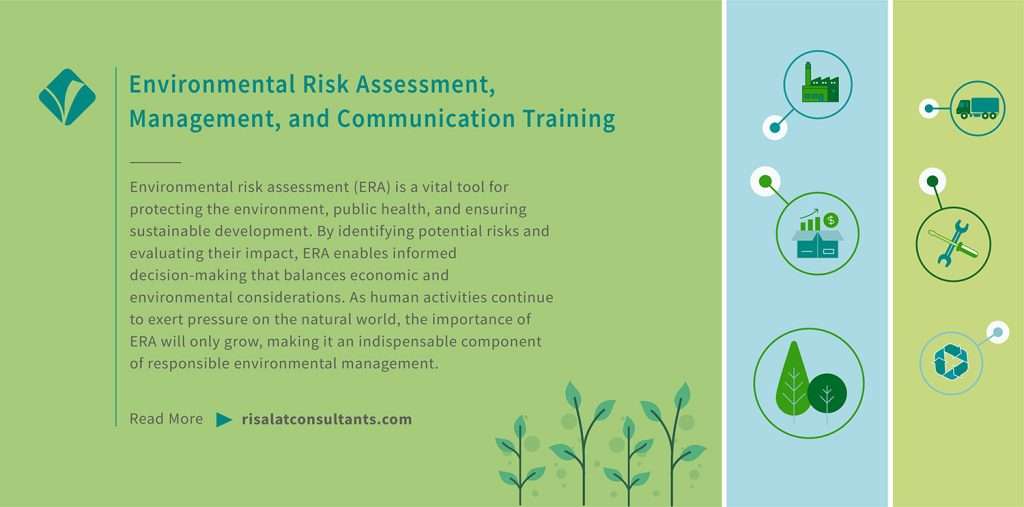
In an era marked by rapid industrialization, urbanization, and climate change, the need for Environmental Risk Assessment and Management (ERAM) has never been more pivotal. Risk assessment and management approaches to environmental issues are increasingly being applied at different levels from strategy and policy to decision making and regulation. The aim is to ensure the protection of human health, preservation of ecosystems, and address global environmental challenges so that we can help shape more sustainable and resilient future.
This training programme aims to provide participants with a robust understanding of ERAM principles and practices as well as effective risk communication strategies, preparing them to address environmental challenges effectively. Upon the completion of the programme, delegates will be able to conduct thorough risk assessments and implement comprehensive risk management strategies, contributing to environmental protection and sustainable development.
Target Audience
This programme has been designed to cater to a diverse group of professionals and stakeholders involved in environmental protection, industrial operations, and sustainable development. Those who can benefit from the programme include but are not limited to:
- Personnel of government and regulatory agencies
- Staff of NGOs working on environmental advocacy, conservation, and sustainability projects
- Environmental managers and consultants
- Industry managers
- Environmental scientists and engineers
- HSE officers
- Urban and regional planners
- Policymakers and decision makers
- Leaders of local communities
Programme Objectives
The broader objective of this training programme is to equip participants with the knowledge, skills, and tools needed to effectively identify, evaluate, and manage environmental risks. It is expected that upon the completion of the programme, its delegates will be able to:
- Demonstrate a fundamental understanding of principles, processes, and methodologies involved in environmental risk assessment and management.
- Recognize potential sources of environmental risks and understand the methods for hazard identification.
- Perform detailed risk assessments to determine the potential impact of identified hazards on human health and the environment.
- Estimating risk levels and understand the uncertainties and variability associated with risk characterization.
- Design and apply appropriate risk control measures, including engineering controls, administrative controls, and emergency response plans.
- Clearly and effectively communicate risk information, facilitate informed decision-making and stakeholder engagement.
Programme Contents
First Day
- Understanding the historical context and applications of environmental risk assessment and management
- Key ERAM concepts: risk, hazard, exposure, and vulnerability
- Fundamental principles of environmental risk management
- Risk science and policy interface
- Hazard identification
- Remote sensing, GIS, and other advanced technologies for hazard identification
Second Day
- Exposure assessment
- Toxicity testing and assessment
- Integrating exposure and toxicity data
- Quantitative risk assessments
- Risk management frameworks and strategies
Third Day
- Risk characterization
- Uncertainty and variability
- Effective Risk communication
- Risk perception and public trust
- Control measures
- Emergency response planning
- Case studies on effective risk management initiatives
Fourth Day
- Environmental regulatory framework
- Regulatory compliance
- Environmental risk monitoring and reporting
- ERAM and corporate social responsibility
- ERAM and sustainability science
Fifth Day – Field Visit
The last day of environmental risk assessment, management, and communication training will be dedicated to field visit. Throughout this session, programme delegates will be able to observe real-world environmental conditions and operations at selected project site. They shall perform hazard identification exercise and define exposure pathways. In addition, participants shall work through collected data to characterize and assess risks and come up with risk management strategies alongside the plan.
Programme Methodology
This training is delivered alongside adult-learning methodology and principles. Participants shall engage in interactive lectures, analyze case studies, and work collaboratively within small groups. They shall develop practical skills via hands-on workshop sessions and targeted exercises. Facilitated discussions during the field visit shall help deepen understanding of environmental challenges and management strategies implemented in the field.
£7,560 per participant · invoice and bank transfer · groups of 5 or more receive a discount
Five or more from one organisation: ask for the group rate on the invoice request.
Ten or more: an in-house version for your institution may cost less per person. Ask for an in-house quote.
Registration closes in 77 days (3 Jan 2027)
Host Country Profile
New Zealand’s environmental assessment practices integrate environmental considerations into all aspects of land use, development, and resource management. Any significant project undergoes an Environmental Impact Assessment (EIA) to evaluate potential environmental effects and propose mitigation measures. This process emphasizes sustainable management, ensuring that environmental decisions account for the needs of both present and future generations.
New Zealand is also well-known for its strong focus on biodiversity conservation and sustainable resource use. The country’s Department of Conservation oversees extensive protected areas, including national parks and marine reserves, to safeguard the unique flora and fauna. Additionally, New Zealand’s water management practices are notable for their catchment-based approach, which aims to maintain water quality and availability. The government actively engages with the public and indigenous communities through transparent communication channels, ensuring that environmental policies are well understood and that stakeholders are involved in decision-making processes.
Course Deliverables
Participants will enjoy a full-service experience that covers everything needed before, during, and after the programme:
Before the Programme
- Participant Pre-Assessment to ensure effective preparation
- Complimentary Visa Support & Advisory (E-visa applications are fully processed by our team)
- Airport Pickup & Welcome Assistance
- Accommodation with Breakfast for the full duration
- Welcome Dinner for networking and connecting with fellow Participants & the Risalat Team
During the Programme
- Risalat Training Kit, including: bag, water bottle, coffee mug, t-shirt, cap, passport cover, pens, notebook, magnet, keychain
- Lunch Provided Daily during training days
- Comprehensive Course Manual & Training Materials
- Project-Based Templates, Tools, and Worksheets
- Mini Pad / Tablet for convenient access to digital resources
- Digital Case Studies, Reading Packs & Reference Materials
- Access to Sample Datasets & Practical Exercises
- Field Visit (where applicable)
- Complimentary Refreshments & Full Training Venue Facilities
- Access to Online Learning Resources
- Entertaining City Tour
- Certificate of Completion
- Risalat Programme Participation Recognition Award
After the Programme
- Post-Training Support & Follow-Up Guidance
- Programme Report