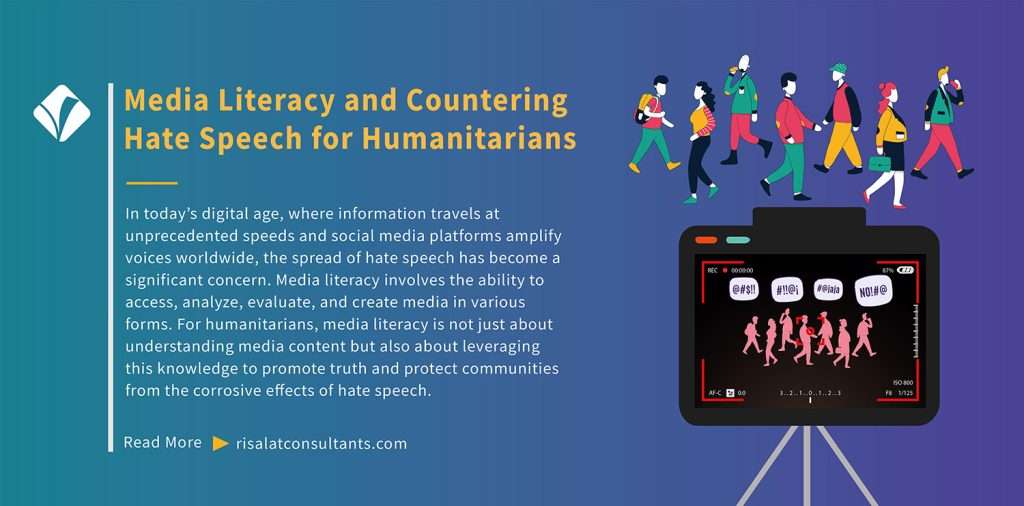
Programme Introduction
Media literacy empowers individuals to navigate the complex media landscape with discernment, fostering informed decision-making, critical analysis, and responsible participation in the digital world. It helps individuals critically analyze the motives behind certain messages and understand how it might be used to manipulate or polarize opinions. What’s more, media literacy acts as a shield against the proliferation of hate speech. Individuals who are skilled in media literacy are better equipped to engage in constructive dialogue and advocate for positive change, countering the divisive effects of hate speech.
For humanitarians who work on the front lines of social justice, relief efforts, and community support, combating hate speech by media literacy is crucial to ensuring that their missions are effective and that they can protect and uplift the vulnerable populations they serve.
This training programme has been exclusively designed to equip participants with essential media literacy skills to better recognize, analyze, and counter hate speech, ultimately contributing to a more informed and respectful media environment.
Target Audience
This programme would benefit a vast array of groups including but not limited to:
- Humanitarian workers
- Communications and media professionals
- Advocacy and policymakers
- Community outreach workers
- Humanitarian workers and field staff
- Community leaders and organizations
- NGO/INGO personnel
Programme Objectives
Upon the successful completion of this training programme, it is expected that the delegates will be able to:
- Assess the reliability of information and discern between accurate reporting and misinformation, leading to informed decision-making.
- Identify hate speech and understand its potential impact on communities and humanitarian efforts.
- Implement effective strategies to counteract misinformation and safeguard the integrity of their work.
- Communicate messages that are accurate, respectful, and effective in promoting their mission and addressing misinformation.
- Work effectively with various stakeholders to develop coordinated responses to media-related challenges
- Contribute to the development and implementation of policies that promote media literacy and address hate speech in humanitarian contexts.
- Uphold ethical standards in their media interactions, contributing to a more respectful and media environment.
Programme Contents
First Day
- Understanding media literacy
- How does media literacy apply to humanitarian work?
- Types of media
- Media sources and their credibility
- Key skills for media literacy
- How to identify credible sources?
- Evaluating content accuracy
- Recognizing bias and perspective
Second Day
- Recognizing hate speech
- Examples and types of hate speech
- Impact of hate speech
- How does hate speech affect humanitarian work?
- Misinformation vs disinformation
- Fact checking
Third Day
- Media monitoring tools
- Strategies for countering misinformation
- Engaging with and addressing hate speech
- Developing accurate, respectful, and effective messaging
- Crisis communication
- Addressing misinformation and hate speech during crisis
Fourth Day
- Developing crisis communication plan
- Collaboration and advocacy for media literacy
- Ethical engagement
- Principles of ethical media consumption and sharing
- Building resilience by promoting ethical engagement
Fifth Day
The last day of the programme shall entirely be dedicated to the hands-on application of material covered. Practical elements of the session shall include but not limited to:
- Case studies on hate speech affecting humanitarian work
- Assignments on analyzing the examples of misinformation and disinformation
- Simulations on practicing hate speech response strategies
- Group exercises on the development of crisis communication plan
- Group exercises on the creation of media monitoring plan
Programme Methodology
The training shall be delivered alongside adult-learning principles and proven techniques to maximize the effectiveness. By incorporating interactive, experiential, and collaborative elements, participants shall get equipped to address media literacy and hate speech effectively in their roles.
£4,860 per participant · invoice and bank transfer · groups of 5 or more receive a discount
Five or more from one organisation: ask for the group rate on the invoice request.
Ten or more: an in-house version for your institution may cost less per person. Ask for an in-house quote.
Registration closes in 14 days (1 Nov 2026)
Host Country Profile
Luxembourg’s efforts in promoting media literacy and countering hate speech are critical components of its broader commitment to human rights and social justice. The country has recognized the importance of media literacy as a foundational skill for all citizens, including those involved in humanitarian work. It has integrated media literacy into its national educational curriculum, ensuring that young people develop critical thinking skills from an early age.
In addition, Luxembourg has also launched several public awareness campaigns aimed at promoting media literacy among the general population. These campaigns highlight the dangers of misinformation and encourage citizens to critically evaluate the media they consume. What’s more, the country has implemented strict laws against hate speech, recognizing it as a serious threat to social cohesion and human rights.