Programme Introduction
Humanitarian action is a powerful and direct way of making an impact on millions of lives globally. This is especially true if one considers an increase in the frequency, intensity, and complexity of natural disasters and conflicts. Rise in populism, isolation, and division within countries and worldwide stand at odds with true humanitarianism. Many humanitarian organizations struggle to plan and react accordingly to the ever-changing landscape although they are constantly being called to adapt and respond to elevated demands.
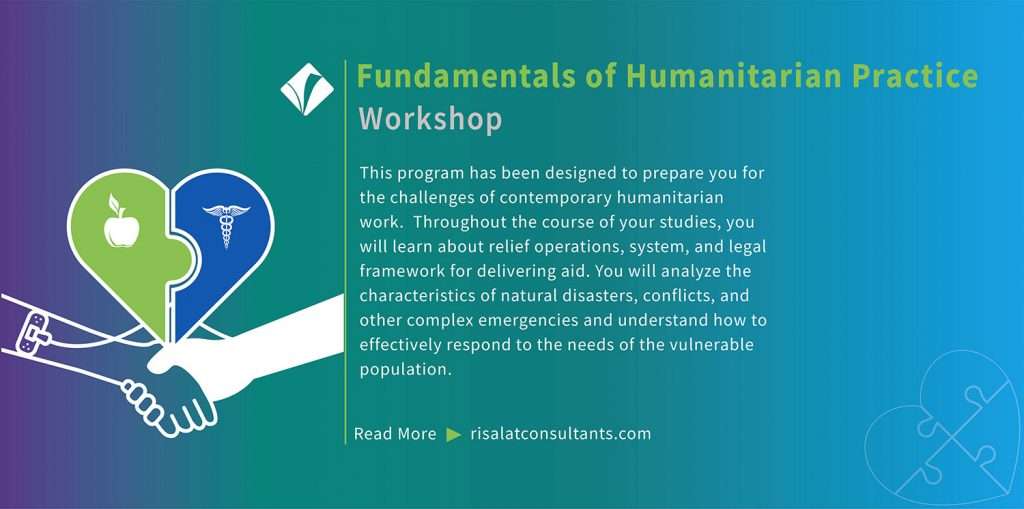
This workshop has been designed to teach you everything you might need to know about the contemporary humanitarian system. Throughout the course of your studies, you will learn about relief operations, system, and legal framework for delivering aid. You will be taught about the characteristics of natural disasters, conflicts, and other complex emergencies and how to effectively respond to the needs of the vulnerable population. This workshop is a unique opportunity for any humanitarian worker to gain a structured understanding of the humanitarian practice and acquire hands-on experience and skills that build up a true humanitarian.
Target Audience
Workshop on the Fundamentals of Humanitarian Practice is the best suit for:
- Technical specialists in humanitarian and development sectors
- Relief Workers from different humanitarian programmes
- The Staff of UN Agencies
- Governmental Personnel involved in emergency aid
- Members of various NGOs/INGOs that are involved in humanitarian assistance
Programme Objectives
Upon the successful completion of this workshop, participants will be able to:
- Comprehend local and international relief system along with the roles and responsibilities of aid workers
- Analyze the characteristics of conflicts, natural disasters, and other complex emergencies
- Understand cultural, social, political, legal, and organizational environment of humanitarian assistance
- Develop essential skills needed for relief workers
- Comprehend key challenges facing humanitarian assistance
Programme Contents
First Day
- History of Humanitarianism
- Understanding Humanitarian Context; Principled Approach
- Humanitarian as a profession
- Working in and across humanitarian teams
- Diversity, Vulnerability, and Inclusion
- Humanitarian Capacity
Second Day
- International Humanitarian Law
- Humanitarianism in Conflict Settings
- Humanitarianism during Natural Disasters and other Complex Emergencies
- Needs Assessment of Vulnerable populations
- Coordination Mechanisms and Structure
- Humanitarian Response Process
- Participation and Accountability
Third Day
- Sphere Standards
- Cash and livelihoods
- Food Security and Nutrition in Emergencies
- WASH in emergencies
Fourth Day
- Education in Emergencies
- Health services delivery in Emergencies
- Protection Programming
- Logistics and Telecommunications in Emergencies
Fifth Day
- Humanitarian Quality Assurance
- Site and Settlement Planning
- Ethical Decision-Making
- Information Management in Humanitarian Context
Sixth Day
Full Day Exposure Visit and Study Tour
The last day of the programme shall be fully dedicated to practical observance and knowledge exchange between Risalat Partner Institutions in the host country and the programme delegates. Throughout the day, participants will be able to meet with the representatives of different NGOs involved in humanitarian and relief operations and learn more about their strategy and how they handle challenges in practice. In addition to that, programme delegates will pay a visit to one of the local refugee hubs and observe their operations in real time.
Programme Methodology
Workshop on the Fundamentals of Humanitarian Practice is a highly interactive programme involving numerous case studies, group assignments, video demonstrations, and the study visit. The presenter will encourage maximum participation of all delegates and promote healthy discussions and knowledge share. Each day will be finalized with participant feedback. The ideas and suggestions received will be considered for the coming sessions to maximize the impact of the programme.
£4,680 per participant · invoice and bank transfer · groups of 5 or more receive a discount
Five or more from one organisation: ask for the group rate on the invoice request.
Ten or more: an in-house version for your institution may cost less per person. Ask for an in-house quote.
Registration closes in 14 days (1 Nov 2026)
Host Country Profile
Poland’s humanitarian profile has been growing over the past year, especially after the war in Ukraine causing a refugee crisis with hundreds of thousands fleeing the country. Polish authorities and NGOs have been heavily involved in the humanitarian response registering and hosting refugees in designated hubs. One of the biggest hubs in Europe, Ptak Warsaw Expo Center with a full capacity of 20’000, only has hosted tens of thousands and assisted with primary supplies and further relocation to other destinations. Emergency and Humanitarian Workers in Poland have accumulated substantial expertise as first responders as well as in analyzing and dealing with the characteristics of complex emergencies.