Programme Introduction
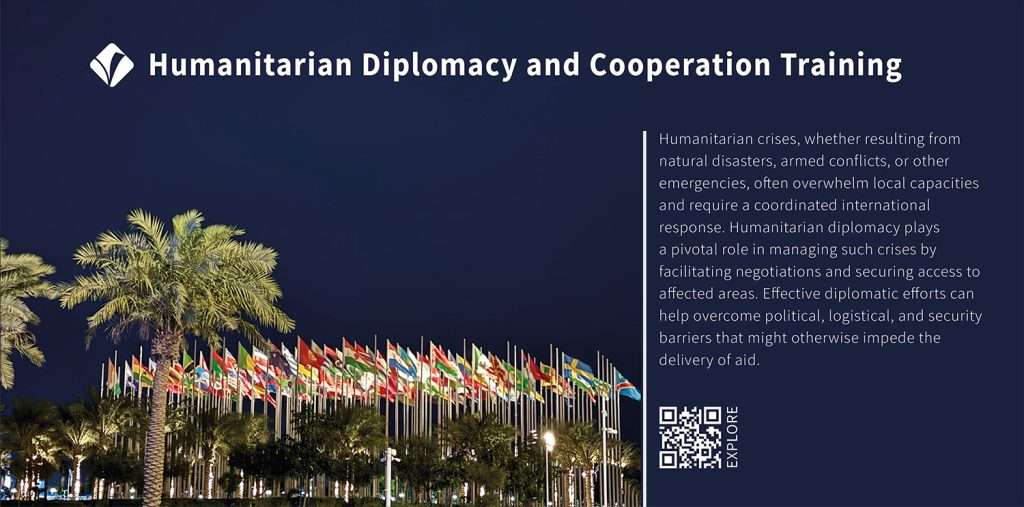
The aim of humanitarian diplomacy is to help alleviate human suffering that is caused by natural disasters, armed conflicts, and other complex crises. It can bridge the gap between political objectives and humanitarian needs when conventional diplomacy efforts fall short. Given its historical importance in the conflict arena, the concept of humanitarian diplomacy has been accepted as an integral part of foreign relations practice, forging cooperation between nations and non-state actors.
This training programme has exclusively been designed by Risalat to help delegates develop essential skills to undertake humanitarian efforts effectively and ethically while navigating evolving political landscapes with discernment.
Target Audience
Humanitarian diplomacy training would be beneficial for a diverse range of professionals involved in humanitarian efforts. These include but are not limited to:
- Members of humanitarian agencies, international organizations, NGOs, and INGOs
- Government officials and diplomats
- Policymakers and advisors
- Crisis and emergency managers and response teams
- Advocacy and communication specialists
- Leaders of communities
Programme Objectives
Upon the successful completion of this training programme, delegates are expected to:
- Comprehend and apply humanitarian principles and frameworks.
- Understand how to negotiate humanitarian access and mediate between conflicting parties.
- Make informed decisions concerning the prioritization of humanitarian needs and effectively respond to emergencies.
- Establish effective coordination mechanisms for a cohesive response to humanitarian crises.
- Speak for humanitarian issues with policymakers, donors, and the public, influencing policy and securing support.
- Engage with affected communities in a respectful and culturally sensitive manner.
Programme Contents
First Day
- Understanding the concept and scope of humanitarian diplomacy
- Historical context and evolution of humanitarian diplomacy
- The role of diplomacy in complex humanitarian emergencies
- Understanding Negotiation and Mediation
- Effective negotiation strategies and techniques
- Mediation techniques for resolving conflicts and securing humanitarian access
Second Day
- Strategic planning in humanitarian crises
- Risk assessment and management
- Decision-making frameworks and tools
- Strategies for fostering collaboration among international organizations, governments, and NGOs
- Managing relationships with donors, local authorities, and affected communities
- Building trust and addressing conflicts of interest
Third Day
- Advocacy strategies and messaging
- Techniques for influencing policy decisions at national and international levels
- Engaging with media and public relations to support humanitarian goals
- Strategies for navigating political obstacles and tensions
- Operational challenges in hostile or restricted environments
- Cultural competence and sensitivity
Fourth Day
- Techniques for effective cross-cultural communication
- Engaging with and understanding local customs and practices
- Ethical dilemmas and decision-making frameworks
- Ensuring accountability and transparency in humanitarian operations
- Addressing and managing ethical challenges
- Leveraging Technology and Data in Humanitarian Diplomacy
Fifth Day
The last day of the programme shall entirely be dedicated to the hands-on application of the material covered. Practical elements of the session shall include but not be limited to:
- Negotiation simulations
- Crisis management simulations
- Advocacy role plays
- Cultural sensitivity workshops
- Scenario-based problem solving
- Media and PR exercises
Programme Methodology
Humanitarian diplomacy training has been designed as an active multi-day skills building exercise. It applies systematic methods to increase the competencies of delegates in advocating and managing humanitarian initiatives and interventions. Each of the sessions features a variety of interactive elements. Open presentations are complemented by group assignments, case studies, role plays, scenario analysis, video demonstrations, and panel discussions.
£4,560 per participant · invoice and bank transfer · groups of 5 or more receive a discount
Five or more from one organisation: ask for the group rate on the invoice request.
Ten or more: an in-house version for your institution may cost less per person. Ask for an in-house quote.
Registration closes in 91 days (17 Jan 2027)
Host Country Profile
Belgium is a notable contributor to the practice of humanitarian diplomacy. Being an EU member state and a major international actor in various organizations like the UN and NATO, the country participates in the construction of global humanitarian strategies.
Being heavily involved in high-level discussions and negotiations, Belgium contributes to crafting humanitarian policies. The country reflects its commitment to addressing global crises by advocating for application of humanitarian principles and protection of civilians. What’s more, Belgium provides substantial financial assistance to a wide range of humanitarian organizations responding to disasters, armed conflicts, and other complex emergencies.