Deposit Insurance Scheme Setup, Fund Management & Bank Liquidation in Singapore
Establishing a resilient deposit insurance scheme is vital for maintaining depositor confidence and financial stability in developing economies.
Your choices are remembered on this device. Designed to WCAG 2.2 AA · keyboard: Tab to move, Esc to close. Read our accessibility statement.
Press / to search from any page · Esc to close
Stay in-line with the latest trends in the banking and insurance industry. Our courses make a perfect match for every need. From SME and Retail Banking to Loans Management, Debt-recovery, Portfolio Allocation, and Fraud Prevention.
Banking & Insurance training courses from Risalat Consultants International: 74 open dates in Dubai, Singapore, Bangkok and Cairo, for governments, international organisations, project teams and companies. Choose a date below, or ask us to run any course in-house.
Establishing a resilient deposit insurance scheme is vital for maintaining depositor confidence and financial stability in developing economies.
This programme gives officials and project teams the practical methods of procurement under World Bank and ADB rules for project teams, built around real…
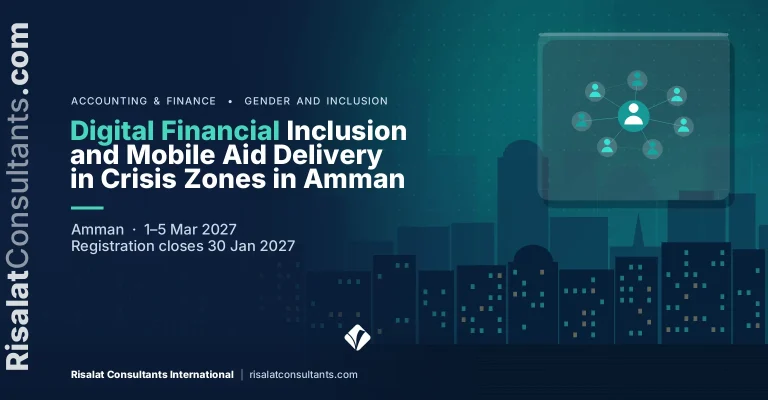
Government agencies and humanitarian organisations operating in fragile contexts face significant operational hurdles when delivering direct financial support to vulnerable populations.
Small island developing states face severe macroeconomic vulnerabilities driven by narrow economic bases, external trade shocks, and disproportionate exposure to climate risks.
This three-day professional training programme delivers rigorous capacity building in emergency fiscal mobilisation and post-disaster treasury execution.
Macroeconomic volatility, terms of trade shocks, and climate vulnerability require robust domestic policy mechanisms to safeguard fiscal stability and economic growth.
A number of countries face the problem related to Non-performing Loans and their levels.
The information acquired from the organization’s financial statement is a primary indicator of its financial viability and helps to determine the entity’s overall direction.…
This programme gives officials and project teams the practical methods of procurement under World Bank and ADB rules for project teams, built around real…
In the modern banking environment, customer expectations are evolving rapidly.
Pension fund strategies are increasingly critical to long-term financial stability, capital market development, and sustainable retirement systems.
Artificial Intelligence, Big Data Analytics, and Machine Learning are transforming the financial services industry by improving decision-making, strengthening risk management, enhancing fraud detection, supporting…
Applied five-day ESG investing and sustainable finance training in Stockholm, with realistic case exercises, institutional tools and a practical improvement plan.
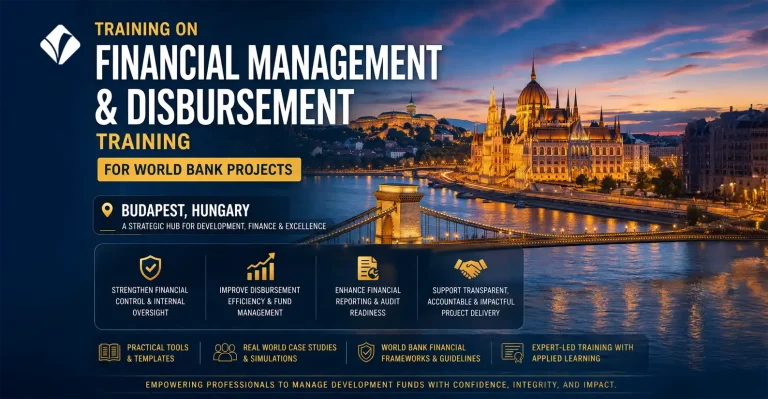
Energy sector investments funded by international development institutions require rigorous fiduciary control and adherence to precise financial management regulations.
Sovereign exposure to climate extremes and natural hazards poses recurring threats to public balance sheets in vulnerable island economies.
The Fraud Identification & Prevention Strategies for the Insurance Industry Training equips insurance professionals, compliance teams, auditors, and risk managers with practical tools to…
The Islamic finance industry stands at a pivotal juncture where digital innovation, FinTech integration, and Shariah compliance must co-exist to shape the future of…
Rapid expansion of mobile network operators and agent networks has transformed financial inclusion, yet it brings substantial regulatory complexity.
Sovereign disaster risk financing has emerged as an essential discipline for safeguarding national balance sheets against climate shocks and geological catastrophes.
Financial Management of Banks training in Jakarta, with practical methods for bank finance, capital, liquidity, asset-liability management and risk controls.
Banking sector is fast evolving and witnessing a transformational change.
This programme gives participants practical knowledge and tools in public financial management and finance, with a focus on what works in public institutions and…
A five-day Berlin programme and study tour on ESG in insurance: Solvency II sustainability risk plans, climate scenarios, underwriting, products, investment, governance and disclosure.
Green & Transition Finance Executive Training in Beijing is designed for institutions that need to move beyond awareness of sustainable finance and translate policy…
Non-Performing Loans (NPLs) remain one of the most pressing challenges for banks and financial institutions worldwide.
Digital financial inclusion serves as a critical operational pillar for humanitarian interventions and social protection in fragile environments.
Expanding affordable home ownership requires robust institutional frameworks that combine state-backed financial assistance with sound credit underwriting.
This programme gives officials and project teams the practical methods of procurement under World Bank and ADB rules for project teams, built around real…
Since the creation of Bitcoin in 2009, over 21000 cryptocurrencies have appeared on global markets hitting a total value of 804$ billion.
This four-day executive course in Amman equips delivery teams to design, implement, and monitor mobile money emergency cash transfers for internally displaced persons (IDPs).…
Sovereign disaster risk financing requires robust operational frameworks to ensure rapid liquidity deployment following acute shocks.
This programme gives officials and project teams the practical methods of procurement under World Bank and ADB rules for project teams, built around real…
FinTech, Digital Banking, and AI are redefining financial services through intelligent automation, Open Banking, digital payments, enhanced cybersecurity, and customer-centric innovation, enabling institutions to…
A five-day masterclass in Kuala Lumpur on SME and retail banking: segmentation, products, SME credit risk and pricing, expected credit loss, digital banks and…
SME Venture Acceleration and Digital Entrepreneurship Financing is an intensive four-day professional course delivered in Marrakech.
Financial inclusion remains central to sustainable economic development, requiring robust regulatory mechanisms that safeguard financial stability while expanding credit access.
Strengthen your expertise in Islamic banking, Shariah-compliant finance, Sukuk, Takaful, Islamic FinTech, digital banking, governance, risk management, and sustainable financial services through this executive…
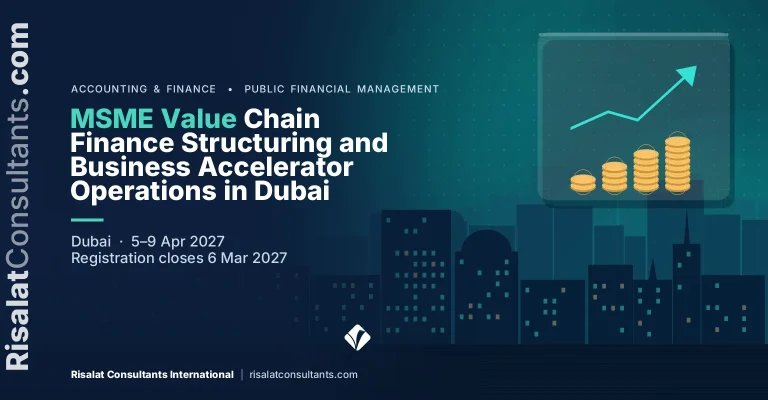
Micro, small, and medium enterprise (MSME) development sits at the centre of economic diversification agendas across emerging markets.
Public finance management during climate and seismic crises requires structured ex-ante planning and dependable contingency financing.
Maintaining financial system resilience requires robust regulatory surveillance, sound early intervention tools, and credible bank resolution mechanisms.
Micro, small, and medium enterprises represent the operational core of emerging economies, yet structural market failures often constrain their access to formal debt finance.…
Development finance institutions face mounting imperatives to mobilise private capital for long-term productive investments.
Developing resilient domestic capital markets remains an essential policy priority for transitional economies seeking to reduce reliance on external foreign currency borrowing.
Maintaining financial sector resilience while expanding access to finance remains a core policy challenge for developing and emerging economies.
The Fraud Identification & Prevention Strategies for the Insurance Industry Training equips insurance professionals, compliance teams, auditors, and risk managers with practical tools to…
Women entrepreneurs across East Africa continue to face persistent barriers to capital and formal business services.
This five-day training programme delivers operational methodologies for financing venture capital ecosystems and accelerating micro, small, and medium enterprise (MSME) expansion.
This intensive five-day programme delivers comprehensive operational knowledge on implementing Basel-aligned risk-based supervisory frameworks and managing problematic bank exposures.
Small and medium-sized enterprises underpin economic growth across developing markets yet frequently encounter substantial obstacles when attempting to access formal debt and export financing.…
Financial sector regulators are navigating an operating environment defined by digital innovation, cross-border flows, and evolving systemic risks.
This programme gives officials and project teams the practical methods of procurement under World Bank and ADB rules for project teams, built around real…
This four-day executive course in Cairo provides comprehensive technical instruction on structuring microfinance facilities and governing community livelihood grants.
Small and medium enterprises in developing island economies face persistent barriers when seeking long-term expansion capital.
The administration of modern deposit insurance schemes and effective bank resolution frameworks are vital pillars of national financial safety nets.
Micro, small, and medium enterprise finance remains constrained across Southern Africa by collateral deficits and elevated risk perceptions among private commercial lenders.
Small and medium enterprise lending remains critical for economic recovery, yet financial intermediaries often face structural constraints when extending capital to vulnerable commercial segments.…
Affordable housing delivery depends on well-capitalised financial intermediaries and robust secondary market institutions.
Microenterprise Emergency Grants and SME Recovery Facility Management provides specialised operational training for administering urgent capital disbursement instruments in post-disaster urban settings.
Micro, small, and medium-sized enterprises form the backbone of Pacific island economies, yet access to debt capital remains heavily constrained.
Sovereign borrowers face complex financing environments requiring sophisticated credit enhancement mechanisms to access long-term commercial capital.
This four-day executive course equips financial authorities with technical tools to supervise savings and credit cooperatives, credit unions and microfinance institutions effectively.
Rapid urban growth across East Africa has created an urgent requirement for scalable residential housing finance solutions.
This four-day professional course addresses the critical structural challenges that constrain micro, small, and medium enterprise finance in developing economies.
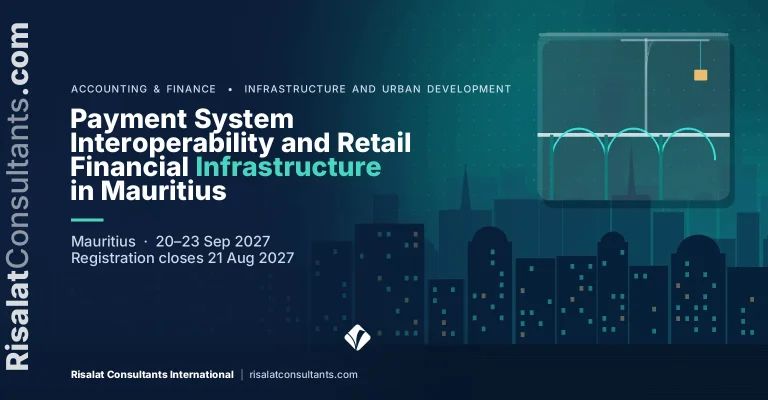
Modern retail payment infrastructures form the foundation of accessible, resilient, and inclusive financial ecosystems.
Sovereign and sub-sovereign entities face an urgent imperative to mobilise private capital for climate resilience and sustainable infrastructure.
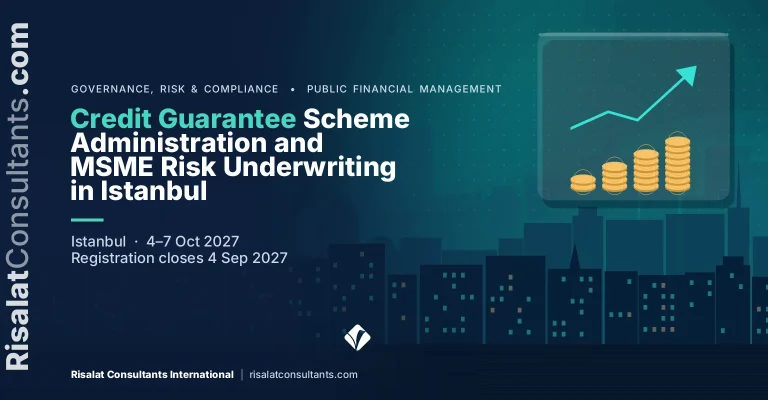
This four-day professional course delivers practical technical competencies for administering partial credit guarantee schemes and underwriting micro, small, and medium enterprise risk.
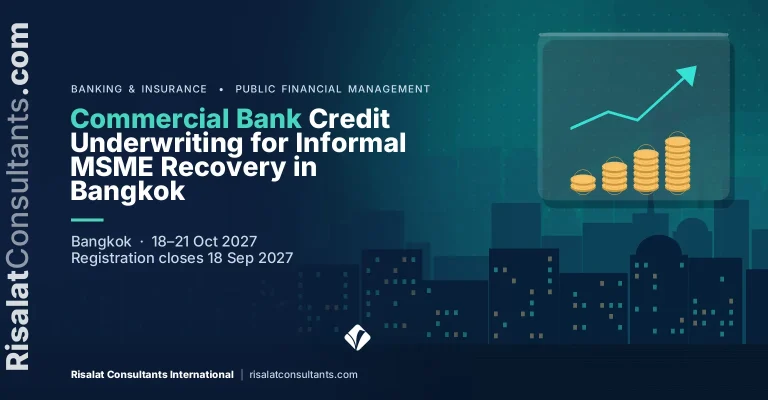
Commercial banks and participating financial intermediaries face structural difficulties when extending liquidity to informal micro, small, and medium enterprises.
Modern digital financial infrastructure serves as the core backbone for resilient capital markets and inclusive domestic economic growth.
This four-day executive course in London delivers rigorous technical grounding in the oversight of national payment systems and inclusive digital finance.
Digital financial services and credit guarantee schemes are transforming access to finance for micro, small, and medium enterprises in fragile and developing economies.
Micro, small, and medium enterprise (MSME) access to credit remains constrained in transition economies facing macroeconomic volatility and heightened credit risk.
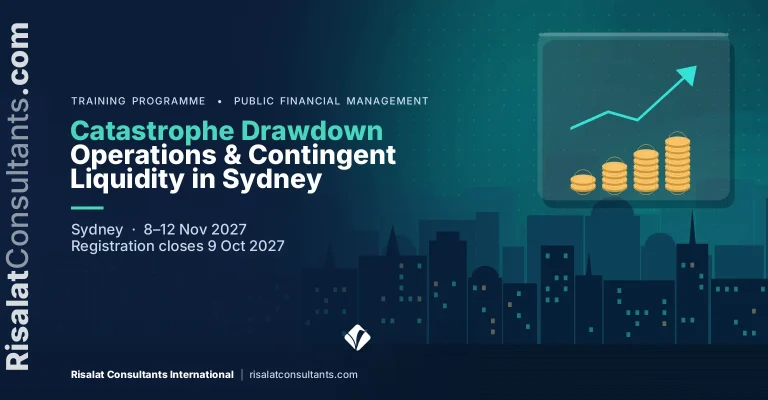
This five-day training programme delivers comprehensive operational expertise on Catastrophe-Deferred Drawdown Options and contingent liquidity facilities.
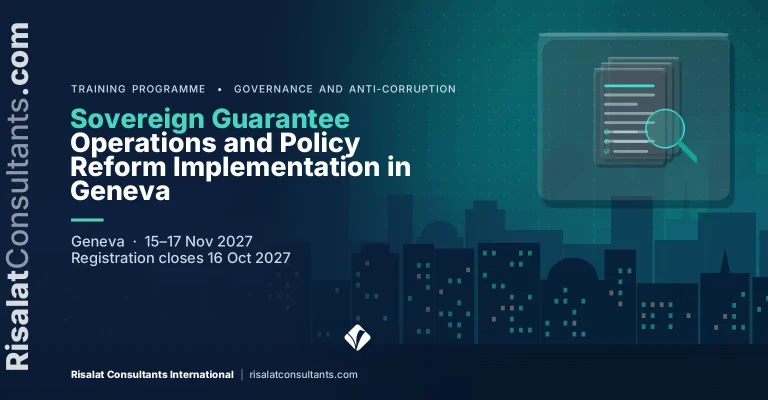
Sovereign guarantee operations and policy reform implementation have become central to modern public financial management.
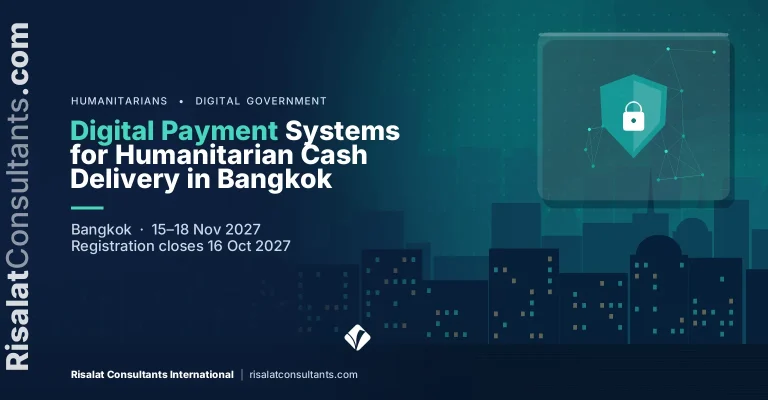
Digital payment systems represent a vital operational link in modern humanitarian assistance, replacing manual disbursements with transparent, auditable cash transfers.
Try another month or city, or ask us to run this programme on dates that suit you.
Request your datesRisalat has 74 open Banking & Insurance courses in 33 cities (Dubai, Singapore, Bangkok, Cairo, Kuala Lumpur and Istanbul and others), from 4 Jan 2027 to 15 Nov 2027. A typical course lasts 5 days. Fees start at £1,400 per participant.
Subjects covered most often: Audit and internal control, Public financial management, Banking and financial sector, Governance and anti-corruption and Accounting and IFRS / IPSAS.
The courses are written for governments, public agencies, teams running donor-financed projects and companies. Sessions combine short inputs, case studies and group work on participants' own files.
Ranked by how often the subject has run in this field and by registrations.
Risalat also advises institutions on these subjects:
Free tools to prepare before a course:
There are 74 upcoming Banking & Insurance courses in Dubai, Singapore, Bangkok, Cairo, Kuala Lumpur and Istanbul, starting between 4 Jan 2027 and 15 Nov 2027.
Fees for the upcoming courses range from £1,400 to £7,860 per participant. Each programme page shows its own fee. Payment is by invoice and bank transfer.
The next one is Deposit Insurance Scheme Setup, Fund Management & Bank Liquidation in Singapore, 4-7 Jan 2027 in Singapore (4 days). Registration closes on 5 Dec 2026.
Upcoming dates are in Dubai, Singapore, Bangkok, Cairo, Kuala Lumpur, Istanbul, London and Amman. Teams from any country can join, and the course can also be delivered in your own country or online.
Yes. Any Risalat programme can be delivered in-house for one institution, in your own country or online, on dates that suit your team and adapted to your own documents. Request a proposal.
It depends on your passport: the free Visa Check shows the visa type, processing time and documents for the host country. Registered participants can request an invitation letter: self-funded participants receive it after full payment, sponsored participants on receipt of an official nomination letter and a payment commitment. Embassies can check the letter online.
Yes. Participants receive a Risalat certificate with its own code and QR code, which anyone can check online at risalatconsultants.com/verify.
You qualify for the discount if you register as a group. See the discount plans and cancellation policy.
We tailor any programme to your institution, in-house, online or in a city of your choice, with content built around your projects. Payment is by invoice and bank transfer.
Essential cookies keep this site secure. With your permission we also use analytics and advertising cookies. Cookie policy
Google Analytics counts visits: in the EU, the UK and Switzerland only after you accept, elsewhere unless you reject it. You can change your choice at any time from “Cookie settings” at the bottom of every page.
The Risalat Brief: one short report a week on a real delivery problem in procurement, safeguards, M&E or public finance, its causes and what works. No adverts; unsubscribe any time.
By subscribing you agree to receive our newsletter. Privacy policyMost questions (dates, fees, visas, registration, invoices) are answered fastest in our website chat, which also keeps a record for your team. For anything else, email info@risalatconsultants.com.
Still urgent?
Please do not send documents or payment details by WhatsApp.